


Comments on: Linux on the LifeDrive and T3
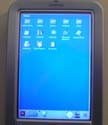 The Treo 650 isn't the only linux project in development. The Hack & Dev group has made progress on getting Linux to work on the Palm LifeDrive and Tungsten T3. They have also made some early progress on getting the open source GPE graphical interface to function. If you're feeling adventurous, they have binaries available to download that will run off an SD card.


Article Comments
(113 comments)
The following comments are owned by whoever posted them. PalmInfocenter is not responsible for them in any way.
Please Login or register here to add your comments.


RE: This should be Palm's backup plan.

Palm m125 December 25, 2002 to March 24 2004 > palmOne Zire 71 March 24, 2004 to March 31, 2005. Tapwave Zodiac 1 April 18, 2005 to November 2, 2005 > palmOne Zire 72 November 2, 2005 to present
RE: This should be Palm's backup plan.
If Access doesn't deliver, Palm should panic.
Marty Fouts
I survived PalmSource '05
RE: This should be Palm's backup plan.
RE: This should be Palm's backup plan.
From the maemo web site:
(http://www.maemo.org/platform/docs/maemo_exec_whitepaper.html)
In many ways maemo could be compared to the GPE (http://gpe.handhelds.org) project that aims to provide Free Software GUI environment for palmtop/handheld computers running the GNU/Linux™ operating system. What makes maemo different is the ease of development it provides to the handheld application developers and a new user interaction design based around task based usage referred to as the Hildon User Interface and Hildon Application Framework.
Believe me, HUI/HAF are not at all like GTK+ ;)
Marty Fouts
I survived PalmSource '05
RE: This should be Palm's backup plan.
Maemo is the Hildon Application Framework (including user interface) on top of GPE. Matchbox window manager, the X server, GTK+, D-BUS, GConf and GnomeVFS are all components of GPE.
Similarly, Palm could build an application framework (PalmOS user interface + compatibility layer) on top of GPE, if PalmSource fails to deliver on time.
RE: This should be Palm's backup plan.
Pat Horne; www.churchoflivingfaith.com
RE: This should be Palm's backup plan.
RE: This should be Palm's backup plan.
Tim Carroll
Your friendly customer service robot
(and big Treo fan)
RE: This should be Palm's backup plan.
More like AJAX, except the shell would be the browser, and the POS apps would run locally. The menu, launcher and windowing system and desktop would however be web technology based (DHTML, Javascript, DOM etc) and the hardware would be controlled via ECMA.
http://www.linuxelectrons.com/article.php/20051121172729132
Its funny, but there was talk a long time ago about how SUN was going to make the OS into "An Insufficiently Debugged Collection of Device Drivers ... " but this is exactly what Netfront is doing to Linux. This could be an amazing springboard for an always connected mobile device. Kind of like ActiveDesktop on steroids.
Surur
They said I only argued for the sake of arguing, but after an hour I convinced them they were wrong...
RE: This should be Palm's backup plan.
Well, those two options are actually very similar. IE integration into Windows goes far beyond just quick browser access. Trident (the IE layout engine) is an integral part of rendering the Windows desktop. So in a sense Windows is a browser-based OS.
Surer posted this link a while ago which gives some insight into ACCESS's plans:
http://www.access-us-inc.com/pdf/access_in_news/LinuxWorld_09_04.pdf
but there was talk a long time ago about how SUN was going to make the OS into "An Insufficiently Debugged Collection of Device Drivers ... "
Surur, wasn't it Netscape who said that? (about Windows)
RE: This should be Palm's backup plan.
Surur
They said I only argued for the sake of arguing, but after an hour I convinced them they were wrong...
RE: This should be Palm's backup plan.
Why would you want to say something that wrong?
Maemo and GPE aren't related. They're competing approaches.
Marty Fouts
I survived PalmSource '05
RE: This should be Palm's backup plan.
> environment. They're building a Palm OS more or less from
> scratch and integrating the NetFront browser, which is a very
> different proposition.
They're not? When did they stop?
PalmLinux is PalmOS on top of a Linux kernel. Access adds Netfront to that -- something they've already done for PalmOS, anyway.
Marty Fouts
I survived PalmSource '05
RE: This should be Palm's backup plan.
Since one of Linux's big problems is a lack of device drivers, I don't think I'd agree with you there.
I seem to recall the quote was by Marc Andreesen, co-founder of Netscape Communications, boasting that Netscape browser and Java would reduce Microsoft Windows to a "poorly debugged set of device drivers". Ironically it was this quote that finally led to Microsoft deciding Netscape as a "threat" and crushing them. If Andreesen had kept his mouth shut Netscape might still be around today. Such is the price of hubris.
As for "the network is the computer" slogan, yes Sun have dropped it. I think these days it's implicitly obvious.
RE: This should be Palm's backup plan.
Nokia sponsored the 1.0 release of GPE and the port of GPE to GTK + 2.0.
Nokia contracted the developer of Matchbox, GPE's Window Manager, to get it Ready For Prime Time so it could be used in maemo.
Nokia has contributed to GnomeVFS, the file system abstraction library GPE uses, and sponsored the development of GnomeVFS using D-BUS, the message bus system GPE uses.
Maemo and GPE use the same X-Server, Window Manager, toolkit, message bus system and file system abstract.
Still think maemo and GPE aren't related?
RE: This should be Palm's backup plan.
> environment. They're building a Palm OS more or less from
> scratch and integrating the NetFront browser, which is a very
> different proposition.
They're not? When did they stop?
November 14th.
PalmLinux is PalmOS on top of a Linux kernel. Access adds Netfront to that -- something they've already done for PalmOS, anyway.
I think you're being disingenuous, Marty. Bundling NetFront with Palm OS would be easy, but that's not what ACCESS are doing. They're integrating NetFront's layout engine into the OS itself, which is much more ambitious.
RE: This should be Palm's backup plan.
please give me the link ..
RE: This should be Palm's backup plan.
Access isn't building PalmLinux using an existing palmtop environment. They're building a Palm OS more or less from scratch and integrating the NetFront browser, which is a very different proposition.
So different, in fact, that there's really no reason for ACCESS to have acquired PalmSource at all if that was their plan for Palm OS.
David Beers
Pikesoft Mobile Computing
Software Everywhere blog
www.pikesoft.com/blog
NetFront not a replacement for Palm OS
It's nothing terribly new, but this part is interesting:
...we believe that together, ACCESS and PalmSource can provide you with opportunities to develop software applications for an even wider market of PDAs, phones and other mobile devices. Today, ACCESS' NetFront technologies are delivering full Internet browsing and related services to mobile devices and consumer electronics ranging from digital television to automobile telematics. We believe the PalmSource developer community has tremendous opportunities in many areas and we want to work with you to foster continued innovation and growth for your businesses.
If anything it sounds like ACCESS hopes to broaden the reach of Palm OS to devices outside of phones and PDAs, rather than collapse it to the phone space as some have suggested. Note that there is no reason that ACCESS should care at all about the existing base of Palm developers if the new API is going to be based on web technologies like ECMAScript and DHTML. They should instead be appealing to web developers. Instead they've repeatedly said that the existing 3rd party developer community is one of the main assets that made the acquisition so valuable to them.
ACCESS most definitely is doing interesting stuff with NetFront to enable it to deliver applications in the form of content (http://www.access-sys-eu.com/dynamic_menu.html) but there's no evidence that this is supposed to be some kind of replacement for Palm OS.
David Beers
Pikesoft Mobile Computing
Software Everywhere blog
www.pikesoft.com/blog
RE: This should be Palm's backup plan.
So different, in fact, that there's really no reason for ACCESS to have acquired PalmSource at all if that was their plan for Palm OS.
Beersie, I would love for you to explain to me how ACCESS could integrate NetFront into Palm OS without acquiring PalmSource?
RE: This should be Palm's backup plan.
Beersie, find me anything in that letter that contradicts what I've said.
If anything it sounds like ACCESS hopes to broaden the reach of Palm OS to devices outside of phones and PDAs, rather than collapse it to the phone space as some have suggested.
I haven't suggested that. I hope they do broaden the reach of Palm OS.
Note that there is no reason that ACCESS should care at all about the existing base of Palm developers if the new API is going to be based on web technologies like ECMAScript and DHTML.
That makes no sense. If ACCESS are introducing a new API then they should care a lot about the existing base of Palm developers. They should care about migrating them to that API.
they've repeatedly said that the existing 3rd party developer community is one of the main assets that made the acquisition so valuable to them.
I'm sure it is. And nothing I've said contradicts that.
RE: This should be Palm's backup plan.
That letter is extremely contentless. The main conclusion anyone can draw from that is that they dont want to Osbourne their current licensees.
Regarding the Netfront OS, Netfront would be the window manager / launcher etc, not the actual apps, hence the ongoing need for developers. I wonder however how useful most Palm apps would be in a set top box.
Surur
They said I only argued for the sake of arguing, but after an hour I convinced them they were wrong...
RE: This should be Palm's backup plan.
In the context of this discussion, yes. You claimed maemo was a GPE GUI. It isn't. It doesn't use GPE in any way. In that sense, "not related".
> I think you're being disingenuous, Marty. Bundling NetFront
> with Palm OS would be easy, but that's not what ACCESS are
> doing. They're integrating NetFront's layout engine into the
> OS itself, which is much more ambitious.
This claim is a direct contradiction of the public plan of record. If it turns out to be true, it will surprise a lot of people in Sunnyvale and Nanjing.
While I personally believe that Access will eventually decide that PalmOS is dead and concentrate entirely on NetFront on a Linux kernel, to date they have been scrupulous in claiming that NetFront is an addition to, not a replacement for, PalmOS components, including GUI.
The one thing I doubt they would do would be to keep PalmOS applications but replace the GUI of those aps with Netfront's. This makes no sense at all from either a technical or a marketing point of view.
Marty Fouts
I survived PalmSource '05
RE: This should be Palm's backup plan.
>> about the existing base of Palm developers if the new API is
>> going to be based on web technologies like ECMAScript and
>> DHTML.
> That makes no sense. If ACCESS are introducing a new API then
> they should care a lot about the existing base of Palm
> developers. They should care about migrating them to that API.
Therein, imo, lies the rub. Palm{source|one} has catered to developers who don't want to cope with changing APIs. The famous support for 68k aps, has left PalmOS in a situation where many of its "developers" are still living on the past API. Supporting the 68k developers on a new Access API makes no sense. Getting those thousands of APs to migrate to a new API when most of them won't even migrate to the OS5 APIs seems unlikely.
Meanwhile, the cynical view is that Sturgeon's law is optimistic when applied to the Palm economy, and that there are probably only a tiny handful of aps that are worth porting to the new API anyway.
Marty Fouts
I survived PalmSource '05
RE: This should be Palm's backup plan.
Maemo uses GPE's X-Server, Window Manager, toolkit, message bus system and file system abstract. How is that not using GPE in any way?
This claim is a direct contradiction of the public plan of record.
What public plan of record is that Marty? Got a link?
to date they have been scrupulous in claiming that NetFront is an addition to, not a replacement for, PalmOS components, including GUI.
Have they? I haven't seen anything that rules out replacing parts of Palm OS. Once again, got a link?
Supporting the 68k developers on a new Access API makes no sense. Getting those thousands of APs to migrate to a new API when most of them won't even migrate to the OS5 APIs seems unlikely.
Meanwhile, the cynical view is that Sturgeon's law is optimistic when applied to the Palm economy, and that there are probably only a tiny handful of aps that are worth porting to the new API anyway.
I never thought I'd say this Marty, but you're absolutely right.
RE: This should be Palm's backup plan.
http://www.access.co.jp/english/ir/ir_shiryo/s040915_03.pdf
This slide should be illuminating. I've added the arrow (to the very small box) of course.
http://surur.sytes.net/netfrontplan.jpg
Surur
They said I only argued for the sake of arguing, but after an hour I convinced them they were wrong...
RE: This should be Palm's backup plan.
http://surur.sytes.net/netfrontplan2.jpg
http://www.access-sys-eu.com/dynamic_menu.html
NetFront Dynamic Menu provides mobile operators with a comprehensive framework that enables mobile content and services to be pushed and pulled directly to and from handsets. NetFront Dynamic Menu tears down the old static mobile data model and replaces it with a dynamic model that presents mobile users with a new, dramatically compelling mobile experience that generates greater interest, interaction, and loyalty. The dynamic delivery of content as supported by NetFront Dynamic Menu is breakthrough technology that completely re-defines the mobile experience while creating new branding opportunities, business models, and revenue opportunities for mobile operators and their content partners.
Some nice pics in the pdf.
Surur
They said I only argued for the sake of arguing, but after an hour I convinced them they were wrong...
RE: This should be Palm's backup plan.
>> GPE in any way.
> Maemo uses GPE's X-Server, Window Manager, toolkit, message
> bus system and file system abstract. How is that not using
> GPE in any way?
None of those things are from GPE. You may as well say mameo uses GPE's kernel as say that, since they both run on Linux.
Look, for instance, at http://gpe.handhelds.org/projects/ where they even point out that the GTK+ widget toolkit is "not maintained by the GPE project" and don't list an X-server, widnow manager, tooklit, message bus system, or file system abstract as GPE projects -- because they're not.
Since you've managed to confuse Gnome and GPE, and don't realize that things like D-Bus don't come from GPE, I can see how you could misunderstand what you've read about Access' plans for NetFront in a PalmOS context.
> Try looking at some of Netfront's plans as they laid them out
> in the past.
http://www.access.co.jp/english/ir/ir_shiryo/s050616_03.pdf
is more interesting. While it predates the PalmSource purchase, it still points out that Access' intent is to keep NetFront OS neutral. (see, especially, page 19 and 22)
I wonder what the '06 supplement will look like, though.
Marty Fouts
I survived PalmSource '05
I'm getting sick of the lies and B.S. here.
As Sam H, Surur and I have indicated, NetFront's plans for PalmOS are already clear: NetFrontLinux.
Marty: please cut the B.S. Your mix of facts and deception is as breathtaking as ever, but the only one you're amusing is yourself. Sturgeon's law ("Nothing is always absolutely so.") will soon come into play and likely put the screws to developers that were dumb enough to put all their eggs into the Palm Basket.
Surur's links to the NetFront Manifesto + Occam's Razor + the price Access paid for PalmSource + Common Sense = the inescapable conclusion that NetFrontLinux is planned to be Access' PLATFORM of the future for mobile devices. PDAs are not the target market - cellphones are.
Sturgeon's Revelation ("90% of everything is crap.") applies to PalmOS software as much as it applies to everything else. I'd probably increase that % to around 99% in the case of PalmOS software - there are probably only 300 apps worth saving out of the 30,000 released for PalmOS over the years. I've argued in the past that the advantages conferred by making a clean break and producing a fresh, modern OS would have outweighed the damage from the loss of legacy apps. (Of course, a StyleTap-like PalmOS emulator for such a CleanSheetOS™ would have lessened the risks even more.) Palm was too lazy to even consider such a revolutionary step. Now it looks like I'll get to say "I told you so".
TVoR
------------------------
Sony CLIE UX100: 128 MB real RAM, OLED screen. All the PDA anyone really ever wanted.
------------------------
The Palm eCONomy = Communism™
The Great Palm Swindle: http://www.palminfocenter.com/comment_view.asp?ID=7864#108038
NetFrontLinux - the next major cellphone OS?: http://www.palminfocenter.com/comment_view.asp?ID=8060#111823
RE: This should be Palm's backup plan.
It's ironic that you accuse me of deception and then turn around and agree with most of what I've said, going so far as to expanding on comments I've made.
I am *not* being deceptive. There's stuff I can't say because of an NDA, but I'm being as up front as I can.
It is not, as far as I know, Access' plan to do anything other than what they've already said: Add NetFront to PalmOS on Linux in the same way they are adding it to a bunch of other OSes.
I do think Access is going to stay with that plan. I think the more experience they have with PalmSource, the less they are going to find of value in PalmOS. In the end, I think they're going to find nothing of value in Sunnyvale, move the Linux work entirely to Nanjing, and use Sunnyvale only to do maintainence on PalmOS compatibility and older versions of PalmOS. But even then, I don't think they'll completely delete PalmOS from "NetFronLinux", and I don't think they'll waste the time, money, or effort to rewrite the PalmOS aps to use the NetFront sdk.
Here's what common sense actually dicates:
Access gets no value out of buying PalmSource and then throwing PalmOS away. So they'll keep it somehow.
PalmSource has contracts with existing Access customers to support PalmOS. So Access will keep PalmSource/Sunnyvale around to do that support.
There's no real value in the PalmOS developer's community, but it's cheaper to just give them an emulator than write them off, and it's better PR. So Access will keep PalmOS, especially the 68k ap emulator, in NetFrontLinux.
But there's no real value in rewriting all those aps. So they won't. So, the plan will remain: "NetFrontLinux" will consist of NetFront -- which Access will continue to sell as its main product, plus PalmOS applications/sdk, which will be kept around as a lip service, all running on a Linux kernel, mostly developed by Nanjing.
Why bother to do it any other way? It's cheap to keep a PalmOS layer around. That layer doesn't interfer with the NetFront layer along side of it and is good PR with the Palm economy folk. There's no advantage to rewriting aps to the new model -- after all, all the aps they'd rewrite already have NetFront equivalents. Why support two versions?
Marty Fouts
I survived PalmSource '05
RE: This should be Palm's backup plan.
Anyway, who cares what Sturgeon thinks - there has been any decent science fiction since Dune.
RE: This should be Palm's backup plan.
> bus system and file system abstract. How is that not using
> GPE in any way?
None of those things are from GPE.
OK Marty, I'll give you ONE example, just to make this REALLY simple for you:
Maemo's window manager, Matchbox, is developed by Matthew Allum.
A quick look at the GPE team members page shows one of the GPE team members is... Matthew Allum!
get your facts straight
That's just wrong. Linux has more device drivers than any other handheld or embedded OS.
In addition, driver development is quite easy for Linux, in particular compared to the old PalmOS (remember all the failed WiFi add-ons?).
Keep trying, Marty. Eventually you'll get it.
Keep up with the "Skippy" nonsense, Marty. It really reinforces your arguments here. The only "childish" one here is Beers who seems to be living in La-La-Land (if one makes the BIG assumption that he's not acting stupid on purpose in an effort to prop up the imploding "Palm eCONomy").
Give it a rest. Beers isn't BSing, he's saying what he believes. You disagree with his interpretation, but having a different opinion doesn't make the guy a liar, at most it makes him wrong - something you are, frequently, even if you never admit it.
I initially thought Beersy was just a naïve, overly-enthusiastic developer that took the failures of PalmOS personally. I now wonder if he has a much sleazier hidden agenda. I'll leave it at that. I'm rarely wrong and my posts are all here in black and white for anyone to rebut if they choose. Whether you care to admit it or not, almost everything I've said here at Palminfocenter has been on the money.
It's ironic that you accuse me of deception and then turn around and agree with most of what I've said, going so far as to expanding on comments I've made.
As you know all too well, the most effective deception involves mixing in some truth so that the lies will seem even more plausible. On the fate of PalmSource/PalmOS, we do in fact agree on many points, Marty. The difference is your posts seem to imply that you feel Access is a LOT more naïive than they are.
I am *not* being deceptive. There's stuff I can't say because of an NDA, but I'm being as up front as I can.
Bull. And I see the NDA hasn't stopped you from backstabbing your former employer. Is revenge sweet, Marty? Does PalmSource booting your a$$ out really warrant you making a mockery of the platform? It's one thing for anonymous individuals making posts here to point out the failures of PalmSource and that the OS might have no future. For YOU - someone intimately involved with the development of PalmOS - to do that here is unfair to your former company and undermines the entire platform. Shame on you. PalmSource's money put food on your table for a year. To turn around and stab them in the back (even though they had just fcuked you in the a$$) is crass.
It is not, as far as I know, Access' plan to do anything other than what they've already said: Add NetFront to PalmOS on Linux in the same way they are adding it to a bunch of other OSes.
The only difference in what I'm saying is the degree of integration. As I posted at the time of the Access deal being announced, NetFront as UI:
http://www.palminfocenter.com/comment_view.asp?ID=8060#111823
"So NetFrontLinux (NFL) will become a new cellphone platform competing with Symbian, Windows Mobile, etc... Wow. That's bold. Nokia should have bought PalmSource just to put them out of business! Mircosoft obviously passed on PalmSource because of its fear of getting sodomized again by the DoJ for "anticompetitive" practices. But Palm on the other hand has no excuse for letting PalmOS slip from their grasp. If Palm seriously feels they have a chance to make it long term as just a handset supplier with no control over PalmOS, they're in for a rude awakening.
OK, so Access purchases PalmSource to get PalmLinux code as a foundation for a NetFront browser UI-based cellphone OS. But if that's the case, then Access may feel there's no urgency in delivering PalmLinux for PDAs and smartphones any time soon. Access is probably more interested in locking up a chunk of the "feature phone" (i.e. "regular" cellphone) market than they are in becoming a supplier of OSes to Treo 600-style high end smartphones or traditional PDAs. The REAL profits will come from being a player in the low end, so PalmSource's current licensees may end up getting fcuked now that Access is calling the shots with PalmOS development. Palm's failure to purchase PalmSource may have just sealed the platform's fate. PalmOS as a PDA + smartphone OS in 2007 may no longer exist. I seriously wonder whether Access will be willing to support development of both PalmLinux and NetFrontLinux for long... PalmLinux either will get canned or else NetFront will take over from Rome as the new PalmLinux UI.
This is NOT good. TVoR is NOT a happy camper right now..."
I do think Access is going to stay with that plan.
Riddle me this, Marty: Did "that plan" work for PalmSource? Why would Access want to continue to fund a business model that (BY DESIGN) was doomed to fail? Palm knew PalmSource would never be viable as an independent company when they orchestrated the bogus "split", but that was actually an (almost) brilliant, ballsy gamble by Palm's management. Do you REALLY think Access spent over $300 million to become the proud owners of cash-hemorrhaging business model? Get serious.
http://www.palminfocenter.com/comment_view.asp?ID=7864
I think the more experience they have with PalmSource, the less they are going to find of value in PalmOS.
Way to backstab, Marty.
In the end, I think they're going to find nothing of value in Sunnyvale, move the Linux work entirely to Nanjing, and use Sunnyvale only to do maintainence on PalmOS compatibility and older versions of PalmOS.
Jesus. Get a grip, Marty. Here we have someone who was intimately involved in PalmSource's PalmLinux efforts saying he thinks the company is worthless? Wow. Wait until Access' lawyers get a hold of you, Marty. Not even Mike Cane's proctologist will be able to put you back together again. [By the way, your statement is probably entirely correct.]
But even then, I don't think they'll completely delete PalmOS from "NetFronLinux", and I don't think they'll waste the time, money, or effort to rewrite the PalmOS aps to use the NetFront sdk.
PACE or a PACE-equivalent is the only thing of value in PalmSource. Yet StyleTap managed to do something similar with relatively little difficulty. What I fail to understand is why Access would spend over $300 million to acquire a company who's assets consist of a dead end, obsolete OS (PalmOS 3, 4 and 5) a dead OS (Cobalt), a questionable OS that's two years away from being ready for Prime Time (PalmLinux) a rather weak troop of codemonkeys in SillyCON Valley (Legacy Palm employees + Holy Be Engineers), a ragtag group in Montpellier and (probably the most useful) a horde of Cheap Chinese Codemonkeys (derived from the China MobileSoft deal). Unless Access was clueless and got suckered into thinking PalmLinux was a LOT closer to going gold than it is, why pay that much money? As we both know, the PalmOS library of legacy apps and the developer community are both ridiculously exaggerated and of relatively little importance in the real world. Why didn't Access just graft their own 68K emulator onto their own NetFrontLinux if they felt the ability to run PalmOS apps was so important? I'm sure that for a fraction of the price they paid for PalmSource, Access could have gone to people like StyleTap, MarksSpace, Pimlico, Picard (TCPMP), Gavin Maxwell, David Kendall, etc. and put together a simple NetFront UI-based 68K-compatible smartphone OS that has MUCH better core apps than what comes with PalmOS. Imagine a smartphone OS that ships with the equivalent of 20 of the best PalmOS apps already integrated into the OS and yet retaining some compatibility with legacy PalmOS apps. As long as it came out before other OSes became entrenched, such an OS would be a guaranteed success. Palm/PalmSource made three tragic errors with PalmOS: first they were lazy/greedy and failed to evolve the OS, instead using the "Zen of Palm" and not wanting to compete with developers B.S. as excuses for shipping a decrepit OS year after year; then they stuck with that slow, buggy mess a.k.a. Cobalt long after it was obvious they needed to cut their losses and start from scratch; then they tried to salvage bits and pieces of code from Cobalt while maintaining compatibility with legacy apps, resulting in the FrankenPalmOS a.k.a. PalmLinux. Had Palm simply bitten the bullet in 2001 and created a CleanPageOS™ with a Linux kernel they would OWN both the PDA and smartphone markets. And this isn't a case of 20/20 hindsight either. There were many people within Palm that advocated for that very OS, but the dumba$$ execs ignored us and instead went down the pathway to doom.
Here's what common sense actually dicates:
Access gets no value out of buying PalmSource and then throwing PalmOS away. So they'll keep it somehow.
Of course they'll keep PalmOS. Who said otherwise?
PalmSource has contracts with existing Access customers to support PalmOS. So Access will keep PalmSource/Sunnyvale around to do that support.
Besides Palm, the revenue from licensees amounts to a pittance, Marty. It would be easy to justify shelving decent support of licensees it Access could find a different market for a PalmOS-derived product (like NetFrontLinux).
There's no real value in the PalmOS developer's community, but it's cheaper to just give them an emulator than write them off, and it's better PR. So Access will keep PalmOS, especially the 68k ap emulator, in NetFrontLinux.
Ouch! Vicious, but true. No doubt PalmSource will appreciate you saying this publicly... I hope for your sake that you're posting from Mexico, Marty. Since a PACE-equivalent is easy to include, there's essentially no downside to maintaining compatibility with legacy apps. As processor speeds increase, it will be easier to brute force some performance issues related to not hooking into the ARM processor directly. And lazy developers can keep using CodeWarrior (or my personal favorite: PDAToolbox ;-O) until the end of time.
But there's no real value in rewriting all those aps. So they won't. So, the plan will remain: "NetFrontLinux" will consist of NetFront -- which Access will continue to sell as its main product, plus PalmOS applications/sdk, which will be kept around as a lip service, all running on a Linux kernel, mostly developed by Nanjing.
I see things as Access being a bit more ambitious, Marty. Otherwise, why bother buying PalmSource at all? NetFront needs to become more integrated into PalmOS (even more than Internet Explorer is with Windows) for this to make sense. Again, refer back to the NetFront-as-OS Manifesto that Surur was clever enough to unearth. Having NetFront as UI should not require apps to be rewritten as long as a PACE-equivalent is included. Of course, new apps would be needed if developers were to write directly for ARM and whatever environment is sittin on top of the Linux kernel. Your services were no longer needed at Access/PalmSource because the Cheap Chinese Codemonkeys have now become the only ones that matter. PalmSource USA is now redundant - how hard do you think it will be to support PalmOS 4 and 5 for the few remaining licensees? Palm has already enacted its contingency plan in anticipation of this change in focus of PalmOS. PACE-equivalents may maintain limited app compatibility in the near future, but Palm can no longer influence which path PalmOS development takes. PalmOS as we know it is DEAD.
Why bother to do it any other way? It's cheap to keep a PalmOS layer around. That layer doesn't interfer with the NetFront layer along side of it and is good PR with the Palm economy folk. There's no advantage to rewriting aps to the new model -- after all, all the aps they'd rewrite already have NetFront equivalents. Why support two versions?
PACE obviates the need to rewrite many apps, but even PACE is a dead end. NetFont willneed to be integrated (as UI) with whatever is sitting on top of the Linux kernel (whether that's PalmLinux or a brand spanking new OS). Palm's problem is that compatibility with their needs is now an afterthought. Yeah, splitting Palm into two companies was a REAL smart move...
TVoR
------------------------
Sony CLIE UX100: 128 MB real RAM, OLED screen. All the PDA anyone really ever wanted.
------------------------
The Palm eCONomy = Communism™
The Great Palm Swindle: http://www.palminfocenter.com/comment_view.asp?ID=7864#108038
NetFrontLinux - the next major cellphone OS?: http://www.palminfocenter.com/comment_view.asp?ID=8060#111823
RE: This should be Palm's backup plan.
I'll skip the childish, but colorful, ad hominem in your post, other than to point out that while you're quick to claim people are BSing or being deceptive, you've never once backed that claim up with any evidence.
And no, Skippy, I don't think Access is naive. I think they misjudged the information provided to them, and that they will discover that misjudgement and correct it. But I also think that when you are doing business internationally, such things take longer than if you're local to the company you bought.
I also don't think Access' management is as cynical as they'd have to be to have acted in the way you're suggesting they are.
As to the self-quote: It's not in Access' interest to alienate PalmSource's customers by not delivering on PalmSource's committments to those customers. Especially since those companies are *already* customers of Access.
Did the plan work for PalmSource? Yes. It got them bought, which if you look at Pat's history is what he was probably made acting chair to do.
> What I fail to understand is why Access would spend over $300
> million to acquire a company who's assets consist of a dead
> end, obsolete OS (PalmOS 3, 4 and 5) a dead OS (Cobalt), a
> questionable OS that's two years away from being ready for
> Prime Time (PalmLinux) a rather weak troop of codemonkeys in
> SillyCON Valley (Legacy Palm employees + Holy Be Engineers),
> a ragtag group in Montpellier and (probably the most useful)
> a horde of Cheap Chinese Codemonkeys (derived from the China
> MobileSoft deal).
You fail to understand because you fail to grasp what PalmSource's assets of interest to Access were, or how they could have overbid in the heat of an auction. You are so hung up on your agenda, that you can't interpret the data in any way that doesn't fit it, even when, as above, you can recognize that the data doesn't fit the agenda.
In your quest to cast every discussion as a debate that you "win", you miss important stuff.
You're colorful, Skippy, but not particularly insightful.
Marty Fouts
I survived PalmSource '05
RE: This should be Palm's backup plan.
> simple for you:
> Maemo's window manager, Matchbox, is developed by Matthew
> Allum.
> A quick look at the GPE team members page shows one of the
> GPE team members is... Matthew Allum!
By that logic, since Pavuk is developed by Marty Fouts and one of the contributes to ARM Linux is Marty Fouts, so, therefore, ARM Linux is part of Pavuk!
Matchbox isn't part of GPE, Sam, It's a window manager that GPE happens to use.
You're making a domain of discourse error. You're confusing _social_ relationships with _technical_ relationships. Maemo doesn't use ANY part of GPE. Maemo and GPE use some of the same underlying components that aren't part of either. Matthew Allum happened to work on one of those underlying components (so there's a social relationship) but that doesn't mean there's a technical one.
Marty Fouts
I survived PalmSource '05
RE: This should be Palm's backup plan.
>> drivers, I don't think I'd agree with you there."
> That's just wrong. Linux has more device drivers than any
> other handheld or embedded OS.
It's not the quantity that counts, it's the quality.
> In addition, driver development is quite easy for Linux, in
> particular compared to the old PalmOS (remember all the
> failed WiFi add-ons?).
This is the major advantage of moving to a Linux kernel from any proprietary kernel: widely available pool of programming talent.
Ironic that you should mention wifi, though. Currently, wifi is one of Linux' significant weak areas.
Marty Fouts
I survived PalmSource '05
RE: This should be Palm's backup plan.
Get real guys! The best posts here are those that present interesting ideas, evidence WITHOUT demanding allegiance!
Access have room to surprise all of us yet and all I see is the vast potential for interesting new opportunities developing on the horizon. I for one wont even look at a WinMob device until Access's efforts are out in the open where I can check them out for myself. In the mean time, many of us have every reason to be optimistic about the Penguin-Powered future, especially since Access seem to be spending valuable R&D time and money on doing something useful with the platform - rather than just looking for a quick return on their acquisition.
Surur / Gekko / TVoR / etc - you remind me of Harry Potter in the first two books/movies... you might have been given fancy wands and are able to talk a good game, but when it comes down to it... you sure don't seem to be packing much magic!
;)
KultiVator
When bitter, ex-PalmSource employees go bad
That's sweet, Marty. Thanks for sharing.
I'll skip the childish, but colorful, ad hominem in your post, other than to point out that while you're quick to claim people are BSing or being deceptive, you've never once backed that claim up with any evidence.
Marty, your abilities to B.S. are about as impressive as your (significant) abilities to shove your foot deeply into your mouth. One would think you'd know better by now, but sadly you don't. When your reading comprehension skills improve, perhaps you'll have no need to ask for what is already sitting right in front of you. Like Beersy, you feign innocence with predictable, pathetic regularity. But somehow you fail to see how tiresome you are, Marty. Even worse, you've come here to Palminfocenter with the not-so-hidden agenda of badmouthing your former employer. Your signature sums it up perfectly:
Marty Fouts
I survived PalmSource '05
Disgusting. Anyone foolish enough to consider hiring you would be wise to stay FAR, FAR away based on your recent (and not-so-recent) history.
And no, Skippy, I don't think Access is naive. I think they misjudged the information provided to them, and that they will discover that misjudgement and correct it. But I also think that when you are doing business internationally, such things take longer than if you're local to the company you bought.
So Access isn't naïve - they just "misjudged the information provided to them" and blew over $300 million on something that is worth MUCH less than the selling price? Wow. That's a classic line, Marty. You're just TOO funny.
I also don't think Access' management is as cynical as they'd have to be to have acted in the way you're suggesting they are.
Access is a company run by professionals and is partially controlled by a party that would have interest in NetFrontLinux. They will do precisely what is in their best interest, whether or not you see this as being "cynical".
As to the self-quote: It's not in Access' interest to alienate PalmSource's customers by not delivering on PalmSource's committments to those customers. Especially since those companies are *already* customers of Access.
Looking at the (lack of) development of PalmOS over the years, it will not take much effort for Access to continue to provide the same level of (non)service. PalmOS 5 could easily be hackable for another 2 years, fulfilling the existing contracts. If Palm abandons PalmOS just as Access abandons developing PalmOS for Palm, does it really matter who gave up on who first? And if Access finds a massive ready-made market awaiting NetFrontLinux, do you think they will care if Palm ups its commitment for PalmOS licenses?
Did the plan work for PalmSource? Yes. It got them bought, which if you look at Pat's history is what he was probably made acting chair to do.
Here you go acting dim-witted on purpose, Marty. "The plan" was PalmSource's desperate move from Cobalt to PalmLinux. Which plan are YOU talking about? And to clarify some more of your obfuscation: McVeigh replaced Nagel in late May, 2005, barely 3 months after he joined PalmSource. When exactly do YOU think McVeigh orchestrated the switch to PalmLinux in order to make PalmSource appear more appealing to potential suitors?
> What I fail to understand is why Access would spend over $300
> million to acquire a company who's assets consist of a dead
> end, obsolete OS (PalmOS 3, 4 and 5) a dead OS (Cobalt), a
> questionable OS that's two years away from being ready for
> Prime Time (PalmLinux) a rather weak troop of codemonkeys in
> SillyCON Valley (Legacy Palm employees + Holy Be Engineers),
> a ragtag group in Montpellier and (probably the most useful)
> a horde of Cheap Chinese Codemonkeys (derived from the China
> MobileSoft deal).
You fail to understand because you fail to grasp what PalmSource's assets of interest to Access were, or how they could have overbid in the heat of an auction. You are so hung up on your agenda, that you can't interpret the data in any way that doesn't fit it, even when, as above, you can recognize that the data doesn't fit the agenda.
No, I fail to understand because PalmSource was not worth over $300 million. I fail to understand because China MobileSoft - the key to the deal - is an unproven asset not worth that kind of money either (in my opinion, as well as that of many others). Unless when CMS opened the kimono for Access they revaled a stunning, hidden set of whoppers, the deal makes little sense. That is, unless Access already has a waiting customer for NetFrontLinux and is confident they can deliver the product on time. If NetFrontLinux for smartphones is all that matters to Access, guess what happens with good old PalmLinux? Adios...
In your quest to cast every discussion as a debate that you "win", you miss important stuff.
No, Marty. The "important stuff" is right there in all of my posts. You just want to keep pretending you don't understand.
You're colorful, Skippy, but not particularly insightful.
Whatever gets you through the night, Marty. Take care.
TVoR
------------------------
Sony CLIE UX100: 128 MB real RAM, OLED screen. All the PDA anyone really ever wanted.
------------------------
The Palm eCONomy = Communism™
The Great Palm Swindle: http://www.palminfocenter.com/comment_view.asp?ID=7864#108038
NetFrontLinux - the next major cellphone OS?: http://www.palminfocenter.com/comment_view.asp?ID=8060#111823
RE: This should be Palm's backup plan.
I love informed debate, and if you have any speculation you would like to throw in the ring, feel free. I demand no allegiance, but I do demand at least a smidgen of evidence.
We can not influence the course of Palm or Access, this is all intellectual jerking off, but its fun nevertheless. Sitting on the sideline criticising the process is even less productive and certainly less interesting. The only mistake you can make is to take anything here too seriously.
Surur
They said I only argued for the sake of arguing, but after an hour I convinced them they were wrong...
RE: This should be Palm's backup plan.
>here too seriously.
Point taken.
I do enjoy the banter most of the time, but every once in a while all the negative spin gets me worked up enough to write a post like this!
People like Mr Beers aint so bad, despite all the bitch-slapping that goes on - and his perspective as an actual developer is useful, to me at least.
Would rather read his informed & measured comments than the usual "its the end of the world" type crap that the doom & gloomers spout seven days a week!
The only mistake you could make is in not taking the Harry Potter reference seriously enough!
Please post some more garbage whining about posts...
;)
KultiVator
Thanks for sharing, Bubba. Maybe next time you can try to post something here that's actually worth reading.
By the way, unless you've been sleeping, you would realize that Surur and I have posted more FACTS (complete with links) than ALL the Palm Apologists combined. The fact that the Palm Apologists (like Jeff Kirvin, RhinoSteve, Beersy, etc.) have all wilted like dead pathetic weeds shows you who has the evidence backing their claims.
------------------------
Sony CLIE UX100: 128 MB real RAM, OLED screen. All the PDA anyone really ever wanted.
------------------------
The Palm eCONomy = Communism™
The Great Palm Swindle: http://www.palminfocenter.com/comment_view.asp?ID=7864#108038
NetFrontLinux - the next major cellphone OS?: http://www.palminfocenter.com/comment_view.asp?ID=8060#111823
RE: This should be Palm's backup plan.
>that's actually worth reading.
Hey, but that's the point I'm making 'Tweeny Voice of Ridicule' - we get inundated with your opinionated dross ('editorial' would be too kind a word) week after week.
RE: This should be Palm's backup plan.
Flame away.
The current argument stems from the fact that ACCESS has been working for some time to make their NetFront web browser into something that's much more like a complete application stack for smartphones. It's an interesting idea to use a browser as a graphical user interface for locally installed software. A sophisticated browser like NetFront has a pretty sophisticated screen rendering engine and scripting capabilities, so from an engineering standpoint it's efficient to re-use these capabilities for locally installed software as well as for rendering web content. Microsoft does this with Internet Explorer. From the standpoint of wireless operators, having a browser that is more central to the application layer of a phone presents great opportunities for pushing not only content onto the phone, but network-aware software as well. And given ACCESS's interest in Linux, it seems conceivable to me that they could even go so far as to leverage some mature and open Linux web and database server technology to deliver software in the form of purely local web applications. This would have some benefits in that it could open up some very slick integration between Internet applications and content and locally installed software. And it would might create a new mobile developer community from programmers whose background is mainly in server and client-side scripting for the web.
Even if ACCESS doesn't go so far as to install a tiny web server on devices for delivering applications, it's quite possible that a browser could be used as the GUI layer for native applications. Palm was actually an early pioneer of this approach with the introduction of Palm Query Applications (PQAs) that gave access to data from the wireless web but also to local software resources. While this technology was abandoned in the last couple of years, it's a reminder that a browser that's part of a complete mobile platform (rather than just an application) can "know" about things like "appointments," "contacts" or third-party application-defined data types and can enable these entities to live both on the Internet and in local memory and worked with from a unified interface.
All this seems very likely, and in fact it appears to be well under way as seen in ACCESS's development of NetFront Dynamic Menu (http://www.access-sys-eu.com/dynamic_menu.html). But where does Palm OS fit into this picture? Of course, it's possible that ACCESS could take either of the two approaches just discussed to deliver something very much like the Palm OS. But did ACCESS buy PalmSource so it could create a version of it that runs inside NetFront as some are now claiming is "obviously" the case?
I think the likelihood of this is exceedingly small for several reasons. Not the least of them by any means is that Palm applications work with the underlying system in a very different way than Javascripted web pages do. A browser might be able to parse a resource database for form resources to get a picture of the user interface it needs to render, but a Palm application does not have a document object model like a web page. This means there is very little in NetFront's scripting engine that would map onto the Palm OS API. Also I'd guess that most popular Palm applications do not rely exclusively on form resources to generate the UI. To make NetFront be a container that runs existing Palm applications they would need to create something that relates to the browser in much the same way that a Java Applet does; that is, very little beyond the fact that it displays inside a browser window.
And sure, ACCESS could do that, but the question is why bother? It would be a huge effort with very little payoff as far as I'm concerned, especially as compared to what could be done by keeping NetFront as an application that runs either side by side or within the Palm OS as it currently does. If the Palm OS API was written in an object-oriented language like Java it might be practical to have some limited and ugly interoperability by calling methods on a Palm OS "applet" from Javascript within the browser client, or vice versa as is possible in some implementations of Java applets. But it's not. So it seems to me that doing this largely isolates the Palm OS from NetFront and prevents a lot of interesting integration from happening.
On the other side, there's a lot of great integration that could be done by enabling NetFront to launch Palm OS applications or to directly work with their data. Conversely, Palm OS has sorely lacked a browser component like that available to Windows developers. ACCESS could give Palm developers the ability to incorporate browser controls into their their applications, and not just for browsing, but for other advanced web features that ACCESS plans for NetFront to offer in the future, such as display of real-time content, interaction with remote servers via HTTP requests, and network "presence" support. This would give NetFront-powered mobile devices instant traction with the large Palm developer community, something ACCESS has said repeatedly is one of the main attractions of owning the Palm OS. Again, if ACCESS only wants to create a Palm OS simulator that runs inside the browser it seems to me they lose most of this interesting potential.
It also means they would have little reason to have purchased PalmSource. StyleTap didn't need PalmSource to help them create a Palm OS simulator that runs on Windows Mobile devices. ACCESS may or may not regret the high price they paid to acquire PalmSource in the heat of a bidding war, but I think we can reasonably assume that their plan was to do something with Palm OS that would require the skills and knowledge of PalmSource engineers.
Bottom line is that while NetFront seems to be a part of ACCESS's plans for supporting a third-party application ecosystem--and potentially a pretty interesting one--that's unlikely to be the whole story. If ACCESS wants to do something more than just burn a bunch of money on Palm OS as some kind of charity case we're probably going to see the NetFront and Palm OS APIs extending each other with the possibility of applications that run inside a browser window, outside the browser, or some interesting combinations of the two. In other words, ACCESS's platform will, for the time being, support Palm apps, NetFront apps, and maybe some apps that we'd consider to be hybrids of the two from where we stand today.
With regard to a comment Marty made earlier about Palm developers not wanting changes to the API, I'd have to say this hasn't been my experience. I know quite a few Palm developers and very few of them are not comfortable and actively developing with Windows APIs, Symbian APIs, Java APIs, or some combination of the above. The fact that they haven't ported their applications to Cobalt isn't because of any resistance to dealing with new APIs, it's because they weren't sure when or if Cobalt devices were going to come to market, which turned out to be a pretty good instinct. I think it's safe to say that most serious Palm developers would love to be able to port their Palm applications to run on an OS that preserves the things that users love about Palm OS if that OS was going to ship on a good number of popular devices.
David Beers
Pikesoft Mobile Computing
Software Everywhere blog
www.pikesoft.com/blog
RE: This should be Palm's backup plan.
> "The plan" was PalmSource's desperate move from Cobalt to
> PalmLinux. Which plan are YOU talking about?
That one.
> And to clarify some more of your obfuscation: McVeigh
> replaced Nagel in late May, 2005, barely 3 months after he
> joined PalmSource. When exactly do YOU think McVeigh
> orchestrated the switch to PalmLinux in order to make
> PalmSource appear more appealing to potential suitors?
I never claimed that McVeigh orchestrated the switch, only that he was probably promoted to sell the company. I don't know who orchestraded the switch; the decision was made before I started at PalmSource.
It doesn't matter who orchestrated it, Skippy, it worked. Got PalmSource sold for a significant premium over what it had been recently traded for.
> No, I fail to understand because PalmSource was not worth
> over $300 million. I fail to understand because China
> MobileSoft - the key to the deal - is an unproven asset not
> worth that kind of money either (in my opinion, as well as
> that of many others).
You fail to understand because you fail to understand what about China MobileSoft was worth money to Access, and you fail to understand that, in the final analysis, even professionals make mistakes.
As far as I can tell, PalmSource acted honestly and in good faith in describing itself to Access, and Access acted professionally and with due dillegence in investing in PalmSource. But PalmSource is the first company Access has ever bought, so while they're professionals, they're hardly experts.
Sorry, Skippy, but Access bought PalmSource fully expecting to deliver PalmOS on Linux with NetFront in addition, and that's still their plan.
Marty Fouts
I survived PalmSource '05
RE: This should be Palm's backup plan.
David Beers
Pikesoft Mobile Computing
Software Everywhere blog
www.pikesoft.com/blog
RE: This should be Palm's backup plan.
"On the other side, there's a lot of great integration that could be done by enabling NetFront to launch Palm OS applications or to directly work with their data. Conversely, Palm OS has sorely lacked a browser component like that available to Windows developers. ACCESS could give Palm developers the ability to incorporate browser controls into their their applications, and not just for browsing, but for other advanced web features that ACCESS plans for NetFront to offer in the future..... Again, if ACCESS only wants to create a Palm OS simulator that runs inside the browser it seems to me they lose most of this interesting potential."
David,
That's exactly what I meant by my earlier question to Sam H about what "integrating the NetFront browser" actually meant. It just seems to defy logic that you'd buy a company, only to then toss their products to one side and just build a glorified emulator. StyleTap and every other emulation project on the planet has shown that's unnecessary. It seems absolutely *nuts* for them to just swipe what bits they want out of PalmLinux and then bury it completely. Surely they could have done that just by being a licensee?
Perhaps Voice is right (stop laughing! :P ) and CMS was what Access was *really* after? But even then, it still doesn't seem to justify what they spent for it.
Of course, the profits to be made from mobile phones make that $300 mil look like chump change...
Tim Carroll
Your friendly customer service robot
(and big Treo fan)
RE: This should be Palm's backup plan.
Your whole thesis depends on that its better to maintain the status quo than do anything new. It seems to me that doing it the NetfrontOS way would launch a whole new internet based OS with the huge advantage of having a large library of apps ready made for it. POS would be equivalent to Java, but probably have more apps available for it. Imagine all the POS games available to download and run on an Access phone, or all the mortgage calculators, or office software etc. All these apps are pretty stand alone, and do not depend on the PalmOS GUI to be available. Its not about the GUI, its about the apps, isn't it?
I remind you that OS X also uses a page description language to render their GUI. In addition many apps are written in HTML and java script, like gmail, hotmail, google maps etc. Going this way would be a bold break with the past and a move to the future, and would still allow most legacy apps to work.
Anyways, if you ask me, the more POS apps are isolated from the rest of the OS, the better. Thats how software are supposed to work in the 21st century.
In short, if you list the advantages and disadvantages of doing it the NetfrontOS way, I think the advantages would win.
Surur
They said I only argued for the sake of arguing, but after an hour I convinced them they were wrong...
RE: This should be Palm's backup plan.
I guess that's the beauty of StyleTap - it recreates a good emulation of the Palm OS environment, including all of the underlying layers such as GUI, Comms, Exchange Manager, VFS, etc
It will be interesting to see how deeply the Palm OS support will be entrenched in their OS. Is it just an emulator (as per POSIX apps running on an NT4 kernel), or a re-engineered modern multi-layer OS with the new APIs needed to carry the platform beyond the hurdles of stable multi-tasking, multi-threading and to finally deliver compelling multimedia performance to rival the best gadgets in the handheld market (the deliverable we all hoped for after the BEOS acquisition).
Would be interesting to be a fly on the wall at the Access development team's meetings!
RE: This should be Palm's backup plan.
I'm not sure why you say that. I'm suggesting that NetFront could potentially provide a substantial expansion to the Palm OS API and vice versa and that this expansion (as opposed to freezing the state of the Palm OS API) would be a logical justification for their interest in acquiring their own mobile OS in the first place.
It seems to me that doing it the NetfrontOS way would launch a whole new internet based OS with the huge advantage of having a large library of apps ready made for it. POS would be equivalent to Java, but probably have more apps available for it.
You're not getting my point. I really don't think there is a practical way to put a browser GUI on a Palm application whether or not it would be nice to do. To take the Java example, the GUI you get inside a Java applet is AWT--it comes from Java, not from the browser. Do this with the Palm OS within NetFront and it would look like StyleTap, not like NetFront. You could make a PalmOS-like OS that used a page description language like XUL but you could never make it run existing Palm applications. You can't read compiled C code as if it was a document and you can't execute machine code from within Javascript. That's what I meant when I said that Palm applications do not have a document object model.
Anyways, if you ask me, the more POS apps are isolated from the rest of the OS, the better. Thats how software are supposed to work in the 21st century.
Well, IMO, software in the 21st century is all about interoperability. The benefit of ACCESS owning both NetFront and the PalmSource OS is that they can integrate the two. The unintegrated state of affairs is what exists today. And there's not a single reason that ACCESS would have had to buy PalmSource in order just to create a simple StyleTap-like browser control.
David Beers
Pikesoft Mobile Computing
Software Everywhere blog
www.pikesoft.com/blog
RE: This should be Palm's backup plan.
What remains to be seen is how well they structure the OS for future development. And could we one day be looking at PDA hardware that is good for more than one generation of OS during its life?
RE: This should be Palm's backup plan.
I think that would be a brilliant outcome. When an app crashes it wont take down the whole OS. Java apps and POS apps and other supported plug-ins (e.g flash) would all be equivalent. Nothing wrong with that. It would be good for developers, good for the networks and good for Access. It would fit in with their pre-PSRC-acquisition strategy.
Surur
They said I only argued for the sake of arguing, but after an hour I convinced them they were wrong...
RE: This should be Palm's backup plan.
Of course, some developers avoid using the APIs and standard GUI controls and handle everything in their own program code (as with many Astraware games for example - which relieve the OS from screen drawing duties).
When you draw directly to the screen you're still using the Palm OS API, but this is a good example of the kind of thing that is all but impossible to implement in a browser in the way that Surer, SamH, and TVoR seem to be implying. You might be able to write Javascript that will give the effect of drawing to a browser window, and you can write Javascript that can walk and manipulate a DOM tree like an XML document, but you can't write Javascript that reads compiled code--or even uncompiled C code--and then injects events into that code's event loop to make it run.
Maybe I'm wrong and there is someone out there who can explain how a browser event model can map to a C API Palm application so you can replace the GUI with scripted markup language. But until this is explained to me by one of you geniuses I'm going to stand behind my experience with both C and Javascript and say I don't think it's possible. Furthermore, I don't think it would accomplish anything.
David Beers
Pikesoft Mobile Computing
Software Everywhere blog
www.pikesoft.com/blog
RE: This should be Palm's backup plan.
However, have you ever tried running even a modest game in a VMWARE session on a regular spec PC? Performance is very poor if you can get the software to even fire up.
Would modern PDA/Smartphone users compromise this much on performance?
RE: This should be Palm's backup plan.
.
.
What remains to be seen is how well they structure the OS for future development.
http://surur.sytes.net/netfrontplan.jpg
Its all there. Notice the title - Netfront, platform in the Net era. Remember that Netfront primarily designs for connected devices. Notice that the native apps feed through the browser. They are making an OS for mobile phones, not PDA's.
Imagine having a very powerful today screen on your phone, connected to a 3G network, showing live weather satellite feeds, news headlines and the traffic report, plus adverts from the local stores through network location information (making the network millions). Access has a vision, and if PSRC was not going to help them fulfill their vision, why did they buy it?
BTW, even under styletap most games run 70% to >100% speed. Remember many games were meant to run on 66Mhz processors.
Surur
They said I only argued for the sake of arguing, but after an hour I convinced them they were wrong...
RE: This should be Palm's backup plan.
Behind the scenes though, you have to remember that real hardware (under clever software instruction) is busy synthesising virtual hardware and in doing so wasting shed-loads of CPU cycles, power, etc over tasks that would be trivial if handled natively (without using emulation).
In a nutshell - emulation is very wasteful, especially in handheld devices where extra CPU cycles come at the expense of battery life. Emulation has a place, for isolated apps - not as a basis for running an entire handheld OS.
RE: This should be Palm's backup plan.
Linux is built to exploit these kinds of techniques - and hopefully Access will implement the new OS in a manner which adopts and extends this approach - providing a sound foundation for Palm apps in the future.
RE: This should be Palm's backup plan.
And there's not a single reason that ACCESS would have had to buy PalmSource in order just to create a simple StyleTap-like browser control.
Surer replied:
I think that would be a brilliant outcome. When an app crashes it wont take down the whole OS. Java apps and POS apps and other supported plug-ins (e.g flash) would all be equivalent. Nothing wrong with that. It would be good for developers, good for the networks and good for Access. It would fit in with their pre-PSRC-acquisition strategy.
OK, so I take it I'm making progress now and you're agreeing that there's not going to be a NetFront GUI skinning the Palm OS (just as a Flash plug-in would have its own GUI).
Now that you're this far, Surer, please explain to us why ACCESS had to pay PalmSource $300M to run Palm OS this way on Linux when StyleTap paid PalmSource $0 to achieve essentially the same result on Win CE.
David Beers
Pikesoft Mobile Computing
Software Everywhere blog
www.pikesoft.com/blog
RE: This should be Palm's backup plan.
The browser will be important in post-Access Palm handhelds and possibly be the engine behind the new program launcher, etc.
Good, I think you're starting to get it. NetFront can be written to take NetFront GUI events and pass them down to the system--the PalmSource/ACCESS Linux system--which could then perform things like launching a Palm application. That's integration between NetFront and Palm OS with the underlying system managing the show. Other kind of integration: tapping a link to an MP3 or video file in a web page and directly launching a registered PalmSource API player like TCPMP or PocketTunes. Or tapping an email link and creating a new email in a PalmSource API mail client registered to do so. Or highlighting an address in the browser and launching some mapping software or inserting it as a record in the Contacts application. Or to attach offline web content to records in your favorite PalmSource API applications.
Now, getting back to the browser being able to work as a launcher, what happens when the selected application launches? Here are the options that I can see (let me know if you see others):
#1. A window opens that is essentially an instance of the NetFront browser, but without the usual browser controls. Inside that window one of the following occurs:
a) A PalmSource "plug-in" displays the application in a simulation of the Palm OS similar to StyleTap. (Provides backward compatibility with existing Palm applications, which ACCESS claims they want, but leaves open a $328M mystery.)
b) a NetFrontOS application launches that looks and works a little like a Palm application but with a GUI based on various markup languages. (No existing Palm application is supported, but developers can rewrite their applications using markup language and Javascript. Most will find porting to Windows Mobile or Symbian a lot easier, but if ACCESS really does a bang-up job marketing this it might be worth a go for a developer like me. Once again, though, the $328M mystery: there's no special reason to buy PalmSource or even China Mobilesoft if the application middleware you are going to create is based on skills that your own development staff have in much greater abundance. After all, Palm has been outsourcing to ACCESS for this kind of work for years, not the other way around.)
#2. If the application is a NetFront API application it launches much like option 1(b) and uses NetFront's GUI rendering engine and whatever event system that provides for interaction with the underlying Linux kernel and services. But if the application is a PalmSource API app it launches with its own GUI, as defined by PalmSource's middleware and it does so within an event loop managed by that middleware. Here's where there is a reason for ACCESS to need PalmSource engineers, including the CMS folks.
Now, if you're Marty and party to undisclosable secret knowledge about Palm OS for Linux that in his opinion will come as an unhappy surprise to ACCESS at some point, you argue that ACCESS will eventually let the PalmSource API die. Not to take anything from Marty, but his assertions don't really give us any way to evaluate whether this skepticism is something that would be shared by others party to the same information or is something of a more personal nature, or just a matter of perspective.
If you're inclined to wild speculation, or to question Marty's judgment, or are by disposition optimistic, or consider that problems known to Marty are things that perhaps could be remedied, with or without the good folks in Sunnyvale, you might see some opportunities that would make ACCESS less willing to sever the partnership between their browser-based application stack and PalmSource's. One thing is that since each are burned into ROM there are possibilities for tight integration that might make the whole greater than the sum of its parts.
Don't ask me to weigh in on this. I'm an optimist by nature, but I admit that having two APIs might be a handful to maintain in the long run unless ACCESS finds some pretty compelling reasons to do so. But I don't have enough information to judge which of the above outcomes will prevail. All I can say is that it's a lot more likely to be the result of ACCESS picking what's behind door #2 than door #1.
David Beers
Pikesoft Mobile Computing
Software Everywhere blog
www.pikesoft.com/blog
RE: This should be Palm's backup plan.
Now that you understand were I'm coming from :) ...
Before styletap we did not think it was possible to run most POS apps on WM. As other people have mentioned, to run POS apps you also need various graphics toolkits and API's. Raw Linux will not provide this. If you have $300 million, maybe its just faster and easier to buy the original code and the company and also eliminate the risk of being sued. Also being the official POS will give them instant credibility, as the captain of the OS, vs always chasing a changing API implemented by some-one else (e.g. Real Rhapsody Harmony vs Apple Fairplay).
In any case, arnt we all just waiting for styletap to get sued? If they get popular enough I guarantee they will be.
Surur
They said I only argued for the sake of arguing, but after an hour I convinced them they were wrong...
RE: This should be Palm's backup plan.
In any case, arnt we all just waiting for styletap to get sued?
I'm not a lawyer, but even if StyleTap could be sued for this I think the question in this context is whether that suit couldn't have been averted by simply licensing the Palm OS before they released their product. A lot cheaper than buying the company.
So why wasn't ACCESS content to become a licensee?
Admit it, Surer, you're really out on a very thin limb here. I'm not saying your view can't possibly turn out to be right. Just that it seems to be premised on a kind of stupidity on the part of ACCESS that doesn't seem justified by their success to date. You have to come up with a better argument if you're going to sell anyone on this.
David Beers
Pikesoft Mobile Computing
Software Everywhere blog
www.pikesoft.com/blog
RE: This should be Palm's backup plan.
The browser will be important in post-Access Palm handhelds and possibly be the engine behind the new program launcher, etc.
Hey, I dint say this. It was actually freakout.
NetFront can be written to take NetFront GUI events and pass them down to the system--the PalmSource/ACCESS Linux system--which could then perform things like launching a Palm application. That's integration between NetFront and Palm OS with the underlying system managing the show. Other kind of integration: tapping a link to an MP3 or video file in a web page and directly launching a registered PalmSource API player like TCPMP or PocketTunes. Or tapping an email link and creating a new email in a PalmSource API mail client registered to do so. Or highlighting an address in the browser and launching some mapping software or inserting it as a record in the Contacts application. Or to attach offline web content to records in your favorite PalmSource API applications.
What you discribe initially is exactly the same amount of intergration IE has in Windows. Sopposedly deep, but not very profound. Also pretty boring.
I subcribe to the 1a view, which I believe would be the most flexible solution, easiest to port to various phone hardware and OS layers (just like java), while still providing the advantage of the large existing library of POS software, while protecting the user from bum software.
Of note is that the HTML GUI would only be used where appropriate. There would still be software that gets to play outside the sandbox, such as Access's own IMAP software, M-IMAP.
About Mobile IMAP
ACCESS’ M-IMAP client solution is an optimized mobile messaging solution based on the most widely adopted Internet messaging protocol IMAP4/SMTP. The technology delivers powerful mail functionalities including an intuitive user interface, universal interoperability and advanced multimedia supports. It offers user familiar experiences similar to PC, and is easy to use. M-IMAP allows multiple attachments, added up to 100K.
Its however clear that 3rd party software would not have the same status as Access or OEM software, and would be expected to run through a sandbox, be it Java or Netfront. This is of course essential for a phone device, where security and stability is very important. Again, look at the slide.
http://surur.sytes.net/netfrontplan.jpg
Surur
They said I only argued for the sake of arguing, but after an hour I convinced them they were wrong...
RE: This should be Palm's backup plan.
As other people have mentioned, to run POS apps you also need various graphics toolkits and API's. Raw Linux will not provide this.
"Raw Linux" is a straw man since that's a kernel, not an operating system. But just FYI, Linux-based OSes have been running the Palm OS emulator since the earliest days of Palm OS.
David Beers
Pikesoft Mobile Computing
Software Everywhere blog
www.pikesoft.com/blog
Someone here is spectacularly wrong. And I think it's...
First off, anyone interested in what's being debated here might want to take a look at this thred (ignore the flames).
http://www.palminfocenter.com/comment_view.asp?ID=8060
Now let's look at the NetFront possibilities:
http://www.palminfocenter.com/comment_view.asp?ID=8060#111861
The_Voice_of_Reason @ 9/12/2005 3:04:26 AM #
The NetFront browser-as-UI paradigm would be a pretty bold step. Windows already can be set up like that and Google's plug-ins show what can be done when one takes a step back and creatively thinks about UI issues.
With new PalmOS apps being written to the Protein APIs, with robust multitasking being built into PalmLinux, with even the most casual of users now being comfortable with a browser interface, and with an always-on wireless connection likely being the centerpoint of all future mobile devices, having apps plug in to a browser-style "launcher" definitely seems both understandable and doable. Not necessarily my cup of tea, but I doubt PalmSource's UI Kiddies wouldn't have too much switching ideas from Rome to a browser paradigm.
NetFrontLinux would seem to be a pretty realistic synergy between Access' and PalmSource's respective IP, in my opinion. Too bad Surur let the cat out of the bag so quickly! Of course, if you happen to have a better explanation for why a Japanese mobile browser company would pay over $300 million for a struggling American mobile OS company, please enlighten us all, Beersy. Otherwise, please S T F U and keep you puerile insults to yourself. Thank you.
TVoR, Inc.
"The [codemonkey] doth protest too much, methinks"
TVoR
http://www.palminfocenter.com/comment_view.asp?ID=8060#111922
It's actually all quite simple: imagine the BROWSER interface as app launcher + file manager, with a pop-up/drop-down list of ALL apps; customisable links (e.g. icons on a DIA) to frequently used apps (both Protein or 68K), email program, contacts, schedule, websites, folders, etc. With an always-on connection, all sources of info are really just DATA - no matter where they're stored (RAM, expansion card, internet, remote hard drives). The browser interface can facilitate accessing this data seamlessly. Imagine being able to browse your home computer, Wi-Fi connected computers, RAM and expansion cards all from the same interface on a mobile device. Yes, you can do this now with a Treo, but everything is a kludge that needs separate software to be installed by a fairly sophisticated user. The Browser UI can potentially bring all the benefits of connectivity home to the average Joe/Jane. THINK about it, Beersy. It's really not a difficult concept. There would be no app compatibility issues, but obviously legacy (68K) apps could not multitask. With multitasking, different apps could appear either as tabs within the browser or icons on a DIA or "sites" choosable from a "history" drop down list or even simpler: through "forward" and "back" buttons. The browser interface presents as if it was in RAM. Very slick.
If you own a CLIE, download AppShelf to get a feel for what I'm talking about.
http://www.jade.dti.ne.jp/~imazeki/palm/APsh/index-e.html
NetFrontLinux might end up being not much more than AppShelp On Steroids™.
And Access' NetFrontLinux Manifesto:
http://surur.sytes.net/netfrontplan.jpg
The (MASSIVE) problem is in the integration of three disparate entities:
1) PACE/68K emulator for support of older PalmOS apps.
2) PalmLinux
3) NetFront
Integrating these items while maintaining their current structures seems to make little sense - NetFrontLinux would be little better than AppShelf running on a PalmOS 5 PDA. Having PalmLinux and 68K emulation interacting with NetFront as virtual plug-ins would seemingly cause too much of a performance hit, but then again, up until StyleTap managed to emulate PalmOS so completely under Mobile Windows everyone thought that was impossible as well.
Scaling back the importance of NetFront (with PalmLinux - not NetFront - doing all of the heavy lifting) would seem a more realistic goal, but again, a poorly-integrated NetFrontLinux seems to have almost no raison d'être - especially at a cost of over $300 million.
But remember: NetFrontLinux is - by necessity - a smartphone OS, so perhaps everyone here is expecting too much. "Adequate" integration may be more than "good enough" in a market where there aren't really any good alternate solutions.
TVoR
------------------------
Sony CLIE UX100: 128 MB real RAM, OLED screen. All the PDA anyone really ever wanted.
------------------------
The Palm eCONomy = Communism™
The Great Palm Swindle: http://www.palminfocenter.com/comment_view.asp?ID=7864#108038
NetFrontLinux - the next major cellphone OS?: http://www.palminfocenter.com/comment_view.asp?ID=8060#111823
RE: This should be Palm's backup plan.
Now look at the little yellow bubbles: Contents, Ringer tones, wall paper, video clips, photos, Java apps, native apps. See how these are not plug-ins nor are they attached to the browser engine? There's an arrow pointing from them to Browser application. Hmmm. Now read that list again. All of those are content items that could be links inside a browser that a browser application could deal intelligently with: content->display it... ring tone->install it to the phone... wallpaper->install it... video clips->play them... photos->show them... Java apps-> get the JAD file and install it with the JAR in the Java environment... Native apps->???
The quote you gave (from the same presentation, am I right?) explains what the browser app will do with native apps: launch them. Presumably if it's a link to a recognized executable file format that's been digitally signed it will enable you to install it from the web, too, like you would the Java app that's in the yellow bubble parked next to it.
So much for the evidence that NetFront OS is subsuming Palm OS.
David Beers
Pikesoft Mobile Computing
Software Everywhere blog
www.pikesoft.com/blog
RE: This should be Palm's backup plan.
Thats why I called it raw.
But just FYI, Linux-based OSes have been running the Palm OS emulator since the earliest days of Palm OS.
Thats presumably using the routines in the ROM's provided, through direct emulation. The ROM's are licensed software, arnt they. But see how much simpler it is if you have direct access to the ROM's VS actually having to emulate the APIs?
But you are right, we wont know exactly why Access did what they did until they release a product, but I think my view is more consistent with their old published plans than yours.
I'm sure we will find out in less than 6 months time though.
Surur
They said I only argued for the sake of arguing, but after an hour I convinced them they were wrong...
RE: This should be Palm's backup plan.
Hey, I dint say this. It was actually freakout.
I apologize. So all your NetFront plan shows is that NetFront will be able to install native applications off the web just like Java MIDlets and the other content items shown in the little yellow bubbles.
Sorry, but that document is majorly not making your case.
What you discribe initially is exactly the same amount of intergration IE has in Windows. Sopposedly deep, but not very profound.
Surer, I'm shocked. Is this the same guy who has been touting Windows Mobile for the seamless integration of its system and applications?
Also pretty boring.
Well, I'm a pretty boring guy. I thought the idea of linking a Google map to a contact or an offline web page to a task without any special software was kinda neat. I'm sure a more creative person could do much better.
Let me try a little harder to be interesting. How about being able to set an alert to go off when a post is made to your favorite RSS feed or a new Podcast is published? (Any reason a headless browser control couldn't run in a PalmSource API application that's running as a service in a background thread?) Or perhaps you prefer not to be bothered and to just have the content queued up in your preferred reader/player for later.
How about enabling applications that use pen input to mark up a web document (HTML, PDF, Word, etc) with digital ink like you can on a Tablet PC? Or cut and paste content from a web page into a document in its original format, or perhaps as a gif or jpg?
How about adding live Internet links to records in any application and enabling the content to be viewed without ever leaving the application?
I dunno. Sounds nice to me.
David Beers
Pikesoft Mobile Computing
Software Everywhere blog
www.pikesoft.com/blog
RE: This should be Palm's backup plan.
It's very easy to draw neat pictures of systems nicely confined into tidy boxes, but the reality of software, even at this late date is significantly different.
The reality is that none of us have any idea why Access though PalmSource was worth 3 times what the market had been recently valuing it at and we're all speculating on what they want to do, will do, or can do.
My opinion is that they wanted CMS, wanted to pay a lot less, got into a bidding war, and, at the last minute, overbid.
One of Access' strengths as a company is that it has been willing and able to make pretty dramatic shifts in its business to accomdate market flucutations. This is, after all, a company that started out selling a programming language for children -- a great distance from what they are very successful at now.
But it would be naive to think that that kind of flexibility will carry them from being a browser vendor to being an OS vendor and they're not naive.
Maybe all they wanted when they spent the money was the security of knowing that they were buying into a company that was already an (albeit failing) OS vendor.
Marty Fouts
I survived PalmSource '05
Surely Access isn't run by complete idiots?
Beersy: I agree. Try moving the box, "Maker's Application Series" into the area showing "Flash Player", "Real Player", etc. But who's APIs will dominate the rest of the infrastructure? PalmLinux's. NetFront will be just a browser and the new UI for PalmLinux unless Access can come up with an efficient way to translate between NetFront and PalmOS. (And if Access spent $300 million without being certain they could to do this translation, they deserve the same fate as Cobalt.)
TVoR
------------------------
Sony CLIE UX100: 128 MB real RAM, OLED screen. All the PDA anyone really ever wanted.
------------------------
The Palm eCONomy = Communism™
The Great Palm Swindle: http://www.palminfocenter.com/comment_view.asp?ID=7864#108038
NetFrontLinux - the next major cellphone OS?: http://www.palminfocenter.com/comment_view.asp?ID=8060#111823
Duelling APIs? Or hold hands and Kumbayah time? You decide.
"The browser will be important in post-Access Palm handhelds and possibly be the engine behind the new program launcher, etc."
Good, I think you're starting to get it. NetFront can be written to take NetFront GUI events and pass them down to the system--the PalmSource/ACCESS Linux system--which could then perform things like launching a Palm application. That's integration between NetFront and Palm OS with the underlying system managing the show. Other kind of integration: tapping a link to an MP3 or video file in a web page and directly launching a registered PalmSource API player like TCPMP or PocketTunes. Or tapping an email link and creating a new email in a PalmSource API mail client registered to do so. Or highlighting an address in the browser and launching some mapping software or inserting it as a record in the Contacts application. Or to attach offline web content to records in your favorite PalmSource API applications.
Now, getting back to the browser being able to work as a launcher, what happens when the selected application launches? Here are the options that I can see (let me know if you see others):
#1. A window opens that is essentially an instance of the NetFront browser, but without the usual browser controls. Inside that window one of the following occurs:
a) A PalmSource "plug-in" displays the application in a simulation of the Palm OS similar to StyleTap. (Provides backward compatibility with existing Palm applications, which ACCESS claims they want, but leaves open a $328M mystery.)
b) a NetFrontOS application launches that looks and works a little like a Palm application but with a GUI based on various markup languages. (No existing Palm application is supported, but developers can rewrite their applications using markup language and Javascript. Most will find porting to Windows Mobile or Symbian a lot easier, but if ACCESS really does a bang-up job marketing this it might be worth a go for a developer like me. Once again, though, the $328M mystery: there's no special reason to buy PalmSource or even China Mobilesoft if the application middleware you are going to create is based on skills that your own development staff have in much greater abundance. After all, Palm has been outsourcing to ACCESS for this kind of work for years, not the other way around.)
#2. If the application is a NetFront API application it launches much like option 1(b) and uses NetFront's GUI rendering engine and whatever event system that provides for interaction with the underlying Linux kernel and services. But if the application is a PalmSource API app it launches with its own GUI, as defined by PalmSource's middleware and it does so within an event loop managed by that middleware. Here's where there is a reason for ACCESS to need PalmSource engineers, including the CMS folks.
Now, if you're Marty and party to undisclosable secret knowledge about Palm OS for Linux that in his opinion will come as an unhappy surprise to ACCESS at some point, you argue that ACCESS will eventually let the PalmSource API die. Not to take anything from Marty, but his assertions don't really give us any way to evaluate whether this skepticism is something that would be shared by others party to the same information or is something of a more personal nature, or just a matter of perspective.
If you're inclined to wild speculation, or to question Marty's judgment, or are by disposition optimistic, or consider that problems known to Marty are things that perhaps could be remedied, with or without the good folks in Sunnyvale, you might see some opportunities that would make ACCESS less willing to sever the partnership between their browser-based application stack and PalmSource's. One thing is that since each are burned into ROM there are possibilities for tight integration that might make the whole greater than the sum of its parts.
Don't ask me to weigh in on this. I'm an optimist by nature, but I admit that having two APIs might be a handful to maintain in the long run unless ACCESS finds some pretty compelling reasons to do so. But I don't have enough information to judge which of the above outcomes will prevail. All I can say is that it's a lot more likely to be the result of ACCESS picking what's behind door #2 than door #1.
Excellent post, Beersy. I think we're both on the same page now (you finally caught up to me ;-O). Again, what makes no sense is why Access would spend over $300 million on code that they either don't need or could have bought/licensed for pennies on the dollar. Something doesn't smell right here. Access either got royally scammed by PalmSource or they've already figured out how to do the integration of NetFront and PalmLinux that preserves the best features of each without compromising speeed or stability. Perhaps the China MobileSoft division specializes in alchemy? ;-O
Parallel APIs - with NetFront acting as an "AppShelp On Steriods™"-style launcher, calling on a StyleTap-type environment when legacy PalmOS apps are launched - should be fairly easy to code. I fail to see how the NetFront APIs could be more valuable than those of PalmLinux, though. If anything should be compromised, I would think NetFront should be what is sacrificed first.
I hope people understand what is being discussed here - this has been one of the more interesting threads I've read in a long time. I just hope Marty doesn't get his a$$ kicked (again!) for letting it slip that Access got suckered and Emperor PalmLinux actually has no clothes.
TVoR
------------------------
Sony CLIE UX100: 128 MB real RAM, OLED screen. All the PDA anyone really ever wanted.
------------------------
The Palm eCONomy = Communism™
The Great Palm Swindle: http://www.palminfocenter.com/comment_view.asp?ID=7864#108038
NetFrontLinux - the next major cellphone OS?: http://www.palminfocenter.com/comment_view.asp?ID=8060#111823
RE: Surely Access isn't run by complete idiots?
Beersy: I agree.
What, I'm a sleeze, I live in La-la-land, and I'm a liar but you agree with me? What about poor Surer who you were praising up and down for his amazing insight a few posts ago? I think you should go back to lending him a hand with your amazing rhetorical powers right now. Please.
David Beers
Pikesoft Mobile Computing
Software Everywhere blog
www.pikesoft.com/blog
Marty... Marty... Marty...
Oh please...
Maybe all they wanted when they spent the money was the security of knowing that they were buying into a company that was already an (albeit failing) OS vendor.
Oh please...
Will you EVER stop slinging the B.S. around here, Marty?
TVoR
------------------------
Sony CLIE UX100: 128 MB real RAM, OLED screen. All the PDA anyone really ever wanted.
------------------------
The Palm eCONomy = Communism™
The Great Palm Swindle: http://www.palminfocenter.com/comment_view.asp?ID=7864#108038
NetFrontLinux - the next major cellphone OS?: http://www.palminfocenter.com/comment_view.asp?ID=8060#111823
What does $320 MILLION buy you these days?
Beersy: I agree.
What, I'm a sleeze, I live in La-la-land, and I'm a liar but you agree with me? What about poor Surer who you were praising up and down for his amazing insight a few posts ago? I think you should go back to lending him a hand with your amazing rhetorical powers right now. Please.
No, Beersy - YOU agree with ME. And I wouldn't call you a liar. You're just "truth-challenged".
Ignoring your silly comments above, I have to congratulate you for making a couple of well-conceived, thoughtful posts to this thread earlier today. I always thought you could do it if you tried, Beersy. Keep it up.
Surur made a simple mistake in reasoning where Palm's apps would fit into that context. It's a complicated, THEORETICAL diagram, so I think his mistake is excusable. And that error doesn't suddenly invalidate any arguments presented. Looks like someone is asking for a good ol' fashioned biotch-slapping again. Step right up, Beersy. Two hands... no waiting...
TVoR
------------------------
Sony CLIE UX100: 128 MB real RAM, OLED screen. All the PDA anyone really ever wanted.
------------------------
The Palm eCONomy = Communism™
The Great Palm Swindle: http://www.palminfocenter.com/comment_view.asp?ID=7864#108038
NetFrontLinux - the next major cellphone OS?: http://www.palminfocenter.com/comment_view.asp?ID=8060#111823
RE: This should be Palm's backup plan.
> than those of PalmLinux, though.
Yes. You do. It should be easy to see, but hey, it must be sitting in that huge blind spot of yours.
> If anything should be compromised, I would think NetFront
> should be what is sacrificed first.
Wrong way around. It's NetFront that's getting accepted by carriers. It's PalmOS that's not getting traction in telephony outside of Palm.
PalmSource got traction this year because of Linux, but that's CMS's area, as per PSRC press releases. What people in this thread seem to have forgotten is that there's yet another interface to be coped with here. CMS is shipping software for feature phones based on Linux, and it ain't PalmOS.
So Access actually has to cope with PalmOS-ancient (PACE), PalmOS-old (Garnet) PalmOS-untried (Cobalt), PalmOS-brandnew (PalmLinux), CMS's telephony Linux *and* NetFront.
Of those, It's CMS's telephony Linux and NetFront that have market traction, followed by Garnet, followed by Pace, with Cobalt and PalmLinux being the untried technologies.
Marty Fouts
I survived PalmSource '05
Crystal ball is still clear...
> than those of PalmLinux, though."
Yes. You do. It should be easy to see, but hey, it must be sitting in that huge blind spot of yours.
As someone who looks at hardware from a PDA (not cellphone) user's perspective, my bias should be obvious. But I expected PalmLinux would have fixed PalmOS' deficiencies in telephony, etc compared to other OSes designed for use with cellphones. As one of the people involved in coding PalmLinux, you would know better than I would about this, so apparently PalmLinux failed in that regard.
[KUMBAYAH]Marty, you're really killing PalmSource with your comments here. Are you not worried that you might get sued? Please don't let your bitterness towards them cloud your judgement.[/KUMBAYAH]
Wrong way around. It's NetFront that's getting accepted by carriers. It's PalmOS that's not getting traction in telephony outside of Palm.
NetFront's success has stemmed from their history of providing the best browser available on several hardware systems, not on Access' ability to ship a whole OS. This is a whole new ballgame and history should not be the only deciding factor.
PalmSource got traction this year because of Linux, but that's CMS's area, as per PSRC press releases.
"as per PSRC press releases" - love it. Keep everything in the public domain. Smart. Anyway, the IDEA of Linux is hot and PalmSource took advantage of that cachet to artificially inflate its asking price. They say you can't shine sh!t, but the Access buyout seems to disprove that adage.
What people in this thread seem to have forgotten is that there's yet another interface to be coped with here. CMS is shipping software for feature phones based on Linux, and it ain't PalmOS.
No, we haven't forgotten. It's just that none of us has any decent figures on how CMS' feature phone OS is doing or even how good it is. Most of us here realize this could be the wildcard that makes sense out of the Access deal, but who's to say? Only a select few PalmSource, Motorola, Palm and Access employees know the real answer to that question.
So Access actually has to cope with PalmOS-ancient (PACE), PalmOS-old (Garnet) PalmOS-untried (Cobalt), PalmOS-brandnew (PalmLinux), CMS's telephony Linux *and* NetFront.
Of those, It's CMS's telephony Linux and NetFront that have market traction, followed by Garnet, followed by Pace, with Cobalt and PalmLinux being the untried technologies.
Actually, things are a LOT simpler than how you've spun it, Marty:
- PalmOS 3 + 4 (68K) = on autopilot, no further work necessary.
- PalmOS 5 (Garnet) = hacked to the point of instability, gradually being stabilized with bugfixes but destined to be EOL'ed soon with no further work necessary.
- PalmOS 6 (Cobalt) = Dead On Arrival, no further work necessary.
- PalmOS 7 (PalmLinux -> NetFrontLinux) = as simple or as complicated as Access is willing to invest the time for it to be.
You also seem to be ignoring potential functionality as a factor in likelihood of acceptance by carriers + hardware manufacturers. History is not everything in this market.
TVoR
------------------------
Sony CLIE UX100: 128 MB real RAM, OLED screen. All the PDA anyone really ever wanted.
------------------------
The Palm eCONomy = Communism™
The Great Palm Swindle: http://www.palminfocenter.com/comment_view.asp?ID=7864#108038
NetFrontLinux - the next major cellphone OS?: http://www.palminfocenter.com/comment_view.asp?ID=8060#111823
RE: This should be Palm's backup plan.
CMS is shipping software for feature phones based on Linux, and it ain't PalmOS.
Yeah, I thought about that. It seems like the NetFront approach would be a nice bridge from feature phones to incrementally "smarter" phones since most phones already have browsers of some kind. And as I noted before, one powerful advantage that a browser-based application stack could have over the Palm OS is to constantly drive users to the network where operators will make money from them. Dynamic Menu sounds like it's designed to enable operators to push stuff out to users--content, maybe applications--and thereby generate more revenue from the device.
One thing that confuses me Marty is your distinction between PACE/68k API and Garnet. You talk about this as though we Palm developers have had a viable option to develop ARM native applications and shed the old 68k API since the introduction of Garnet. But this isn't true. Back in 2003 we got a limited ability to add PACE Native Objects (PNOs) with pieces of ARM code invoked from within 68k code, but no real tools for developing pure ARM applications until Cobalt and PODS were released. In fact, to my knowledge, even the Garnet ROM applications (with the exception of the HotSync app) all still run in PACE. For all intents and purposes the Garnet API is the Palm OS 4 API with some incremental additions. The distinction is specious.
David Beers
Pikesoft Mobile Computing
Software Everywhere blog
www.pikesoft.com/blog
TVoR, you are a liar, pure and simple
No, Beersy - YOU agree with ME. And I wouldn't call you a liar. You're just "truth-challenged".
I, on the other hand have no problem calling you a liar. Now you admit that Surer is wrong but what were you saying just three days ago when I pointed out his mistake and said "there's no evidence that [NetFront] is supposed to be some kind of replacement for Palm OS"?
Why, you're response is right here: http://www.palminfocenter.com/comment_view.asp?ID=8273#116388
Beersy, your constant B.S. and the sleazy manner in which you attempt to discount the obvious is truly pathetic.
As Sam H, Surur and I have indicated, NetFront's plans for PalmOS are already clear: NetFrontLinux.
You love the throw the word "lie" around, TVoR, but we scarcely ever get a post out of you that isn't full of one lie or another. This one just happens to be among the most glaring because the proof of it falls on the very same page.
David Beers
Pikesoft Mobile Computing
Software Everywhere blog
www.pikesoft.com/blog
RE: This should be Palm's backup plan.
> PACE/68k API and Garnet.
You've convinced me that there isn't one.
Marty
Marty Fouts
I survived PalmSource '05
RE: This should be Palm's backup plan.
> know better than I would about this, so apparently PalmLinux
> failed in that regard.
Don't ask me about telephony. That's all handled in France. I did file systems and other kernel bits.
> Are you not worried that you might get sued?
No. Expressing an opinion about a former employer isn't grounds for a suit. Disclosing facts learned under a nondisclosure agreement would be, but I'm very careful not to do that, just as I was when I was arguing here as an employee.
> Anyway, the IDEA of Linux is hot and PalmSource took
> advantage of that cachet to artificially inflate its asking
> price.
Didn't you read the various filings? PalmSource didn't artificially inflate its asking price, it let a bidding war develop between two suitors, and the bidders set the price.
> It's just that none of us has any decent figures on how CMS'
> feature phone OS is doing or even how good it is. Most of us
> here realize this could be the wildcard that makes sense out
> of the Access deal, but who's to say?
My only point was that there are CMS customers that Access has to support.
> Actually, things are a LOT simpler than how you've spun it,
> Marty: [list of products]
It wasn't the implementations I meant, although I wasn't clear, it was the interfaces that went with those implementations. That's what the compatibility and emulation layers do, after all, support obsolete interfaces from old versions of the OS.
> - PalmOS 7 (PalmLinux -> NetFrontLinux) = as simple or as
> complicated as Access is willing to invest the time for it to
> be.
You might not want to call it PalmOS 7, just yet. If I were Access, given that PalmSource sold away the rights to 'Palm', I wouldn't wait the three or so years, but would probably bring out my new Linux based OS under its own name, anyway.
> You also seem to be ignoring potential functionality as a
> factor in likelihood of acceptance by carriers + hardware
> manufacturers.
Not really, no.
Marty Fouts
I survived PalmSource '05
RE: This should be Palm's backup plan.
Yeah, I thought about that. It seems like the NetFront approach would be a nice bridge from feature phones to incrementally "smarter" phones since most phones already have browsers of some kind. And as I noted before, one powerful advantage that a browser-based application stack could have over the Palm OS is to constantly drive users to the network where operators will make money from them. Dynamic Menu sounds like it's designed to enable operators to push stuff out to users--content, maybe applications--and thereby generate more revenue from the device.
Does this mean you are now coming round to my POV?
Surur
They said I only argued for the sake of arguing, but after an hour I convinced them they were wrong...
RE: This should be Palm's backup plan.
No, we're not talking about PalmSource OS at all here, just the NetFront browser as a way of delivering applications written for its own API.
David Beers
Pikesoft Mobile Computing
Software Everywhere blog
www.pikesoft.com/blog
RE: This should be Palm's backup plan.
The browser will be important in post-Access Palm handhelds and possibly be the engine behind the new program launcher, etc.
And Surur wrote:
Hey, I dint say this. It was actually freakout.
And freakout replies:
Actually, guys, it was KultiVator. :P
Slightly OT, the Dynamic Menu idea is a *terrible* one. Can you imagine having the main screen of your phone altered on a whim whenever your carrier feels like it? I don't know about any of you, but personalisation is super-important to me when it comes to something I have to use all the time. I like to know where everything is, I like to decide where it goes, and I don't like it to change. It seems something like the Dynamic Menu would take away personalisation from your device. After all, it does essentially sound like a glorified web portal. And that can be done from a link in the browser. No need to shove it in user's faces.
Further to that, if your carrier can also install apps at a whim, it would seem to open up a very ugly security hole, if the user isn't informed about it and asked whether or not they want to install it. As standard mobile handsets take on more and more "smartphone" capabilities, the potential for devestating viruses that exploit this no-questions-asked install routine would be tremendous.
Scary. Unless creating that kind of virus is a lot harder than I think it would be.
Tim Carroll
Your friendly customer service robot
(and big Treo fan)
RE: This should be Palm's backup plan.
I would not worry about security. The last thing they would want is unlicensed software and content running on their devices. Phones these days are DRM'd to the hilt.
I think their OLD design has amazing potential for finally taking the web to the people. I would actually be disappointed if they just do another boring PDA OS.
Surur
They said I only argued for the sake of arguing, but after an hour I convinced them they were wrong...
Beersy:
I, on the other hand have no problem calling you a liar.
Good for you, Beersy. Fortunately, I have no need to stoop to your sleazy level to express my views.
Now you admit that Surer is wrong but what were you saying just three days ago when I pointed out his mistake and said "there's no evidence that [NetFront] is supposed to be some kind of replacement for Palm OS"?
NetFrontLinux is the replacement for PalmLinux. In that way Access will be replacing PalmOS with its own custom OS. Why don't you post a link to your original comment for all to see?
Why, you're response is right here:
http://www.palminfocenter.com/comment_view.asp?ID=8273#116388
"Beersy, your constant B.S. and the sleazy manner in which you attempt to discount the obvious is truly pathetic.
As Sam H, Surur and I have indicated, NetFront's plans for PalmOS are already clear: NetFrontLinux."
You love the throw the word "lie" around, TVoR, but we scarcely ever get a post out of you that isn't full of one lie or another. This one just happens to be among the most glaring because the proof of it falls on the very same page.
I don't see the word "lie" in ANYTHING I said about you, Beersy. Is that what the voices are telling you? Keep up with the personal attacks, Bubba. They really reinforce your position. Take care.
TVoR
------------------------
Sony CLIE UX100: 128 MB real RAM, OLED screen. All the PDA anyone really ever wanted.
------------------------
The Palm eCONomy = Communism™
The Great Palm Swindle: http://www.palminfocenter.com/comment_view.asp?ID=7864#108038
NetFrontLinux - the next major cellphone OS?: http://www.palminfocenter.com/comment_view.asp?ID=8060#111823
RE: This should be Palm's backup plan.
"They could serve you ads based on the content of your last SMS, just like gmail..."
No, no, no!!!! Again, a *terrible* idea. Ads have *no* place on the main screen of a phone. Within a browser, or even as a tag to an SMS, maybe. But ever-changing, in my face every day?
Surely I'm not the *only* person who hates that idea?
Like you, Surur, I think their ideas have great potential and it would be disappointing to see something same-old-same-old. But spamming your home screen sounds like one of *the* fastest ways to alienate your user base.
I can certainly see how it makes sense for a carrier - $$$!!! But as a user, it's a rubbish idea and should be binned. People want to get things done with their phones, primarily. They are toys as a secondary purpose. Dynamic Menu seems to be trying to reverse that. Which is just stupid.
Maybe Japanese phone users are different.
Tim Carroll
Your friendly customer service robot
(and big Treo fan)
RE: This should be Palm's backup plan.
Of course these things turn users of (I agree) but we dont make the design decisions. Everything is profit driven, and making the carriers happy is the main function of cellphone software providers. DoCoMo IS happy with Access, they recently (30 Nov 2005) invested $130 million in Access, raising their stake to 11.6% I believe.
http://www.nttdocomo.com/presscenter/pressreleases/press/pressrelease.html?param%5Bno%5D=597
ACCESS develops and markets Internet software, mainly for mobile phones. Their products are marketed under the brand name NetFront®. DoCoMo and ACCESS have been strengthening their partnership to develop mobile phone browsers and ACCESS's browser is widely used in DoCoMo's 3G FOMA® handsets. Through this investment, DoCoMo and ACCESS aim to enhance their already close working relationship in development of upper layer application software centered on browser technology.
Note, this is after the PSRC purchase, and they still aim the "development of upper layer application software centered on browser technology." It does not sound to me as if their plans have changed.
And yes, Japanese phones are pretty special. Note some of the things I talked about earlier are already in practice.*
Pay by credit via infrared
i-mode FeliCa (Flash Version)
Multimedia info complex
Attraction reserve & pay
*E-tickets and e-coupons
Versatile vending machine
*Bus location notify service
*Area information delivery
Video mail service
FOMA as a remote-control
*Delivery of location info
Barcode Shopping
Wireless LAN service
*Telematics-related service
*Video & info on demand
http://www.nttdocomo.com/corebiz/icw/index.html
Making phone calls seem pretty secondary.
Surur
They said I only argued for the sake of arguing, but after an hour I convinced them they were wrong...
Micheal Mace still reads PIC!!!
And then there's Japan, which has its own unique mobile ecosystem that gets almost completely ignored by the rest of the world, even though a lot of the most important mobile trends started there first (cameraphones, for example).I try to keep tabs on Japan through several websites that report Japanese news in English. Two are Mobile Media Japan and Wireless Watch Japan. They both post English translations of Japanese tech news, and you find all sorts of interesting tidbits that are almost completely beneath the radar in the US.
Case in point: at the end of November, NTT DoCoMo announced that it is raising its investment in Access Corp to 11.66% of the company's stock. That's right, the same Access that just bought PalmSource. So DoCoMo, one of the world's most powerful operators, now owns 11.66% of Palm OS and the upcoming Palm OS for Linux. This story got passing mentions on some Palm OS bulletin boards, but I didn't see anything about it anywhere else.
http://mobileopportunity.blogspot.com/2005/12/ntt-docomo-buys-1166-of-palm-os-watch.html
Do you think he wasn't aware of the DoCoMo/Access deal and the implications until I mentioned it? Seeing as I posted yesterday, and he posted today, is it coincidence? Shame on him for not even crediting PIC.
Surur
BTW, if anyone is wondering what Mike Cane is doing these days...
http://www.internettablettalk.com/forums/showthread.php?t=723&page=1&pp=10
They said I only argued for the sake of arguing, but after an hour I convinced them they were wrong...
RE: This should be Palm's backup plan.
>BTW, if anyone is wondering what Mike Cane is doing these days...
http://www.internettablettalk.com/forums/showthread.php?t=723&page=1&pp=10
"Diary of a Madman"
Surer still reads Mobile Opportunity!!!
"Do you think he wasn't aware of the DoCoMo/Access deal and the implications until I mentioned it? Seeing as I posted yesterday, and he posted today, is it coincidence? Shame on him for not even crediting PIC."
I posted this news here three weeks ago, Surer:
http://www.palminfocenter.com/comment_view.asp?ID=8216#115782
As for Mace, he did say that it "got passing mentions on some Palm OS bulletin boards" (which is true: no one commented on my mention of it) and explained that his sources for this information were Mobile Media Japan and Wireless Watch Japan. I'd say the shame is on you for taking credit where it ain't due! :p
David Beers
Pikesoft Mobile Computing
Software Everywhere blog
www.pikesoft.com/blog
RE: This should be Palm's backup plan.
Nice link!
Gekko;
Cane seems to be rambling and even more disjointed than he was in the past. HOW on earth did he manage to finagle a free 770 outta Nokia? At least it's good to see he's one of the few & the proud still championing classic Graffiti!
You'd think he'd at least drop by PIC on OCCASION to say hi and gloat at us from the "other" side.
Pilot 1000-->Pilot 5000-->PalmPilot Pro-->IIIe-->Vx-->m505-->T|T-->T|T2-->T|C-->T|T3-->T|T5-->TX
RE: This should be Palm's backup plan.
Surur, please don't start doing a "TVOR" on us. One egomaniac is more than enough.
It might not be the "mythical color HandEra", but I'm liking my TX anyway.
Mike Cane Meltdown?
Is that humanly possible?
DAAAAAAAAAAAAAAAAIIIIIIIIIIIIIIIISSSSSSSSSSSSSYYYYYYYYYYYYYYYYYYYYYYY....
------------------------
Sony CLIE UX100: 128 MB real RAM, OLED screen. All the PDA anyone really ever wanted.
------------------------
The Palm eCONomy = Communism™
The Great Palm Swindle: http://www.palminfocenter.com/comment_view.asp?ID=7864#108038
NetFrontLinux - the next major cellphone OS?: http://www.palminfocenter.com/comment_view.asp?ID=8060#111823
RE: This should be Palm's backup plan.
"Dave Nagel...my mind is going...I can feel it...I can feel it...There is no question about it..."
Pilot 1000-->Pilot 5000-->PalmPilot Pro-->IIIe-->Vx-->m505-->T|T-->T|T2-->T|C-->T|T3-->T|T5-->TX
RE: This should be Palm's backup plan.
Good point. I still think its a mighty coincidence however... He did not publish his article 3 weeks ago when David mentioned it, did he.
Surur
They said I only argued for the sake of arguing, but after an hour I convinced them they were wrong...
RE: This should be Palm's backup plan.
i'm slipping away myself. you see that i post less and less here. one day, i'll be gone. times change and you move on.
when it's obvious that the evil apologists have finally lost for good, it's just not fun anymore.
it's been death by a thousand cuts for those poor bastards.
RE: This should be Palm's backup plan.
That's what happens when you honor Palm OS with your lips while your heart is full of filthy cravings for a Windows Mobile Treo, my son. In the eyes of the Lord you are already gone for you have forsaken him and bourne false witness against his Palm OS saints. But take heart. Our Lord is merciful and will forgive all sins if you repent and proclaim your faith in Him and his Holy PalmSource. On that day His saints will kill the fatted calf (or Steve Ballmer if none is at hand) put a Linux Treo in your hand and a nice Bluetooth headset in your ear and a great celebration will go up; for Gekko, who was lost, will have been found! Thus saith the Lord.
Try it and let us know if it works, Gekko. :)
David Beers
Pikesoft Mobile Computing
Software Everywhere blog
www.pikesoft.com/blog

iPod
Palm m125 December 25, 2002 to March 24 2004 > palmOne Zire 71 March 24, 2004 to March 31, 2005. Tapwave Zodiac 1 April 18, 2005 to November 2, 2005 > palmOne Zire 72 November 2, 2005 to present
RE: iPod
But iPod Linux will work better for multi-media features since the iPod has a larger hard drive then the LifeDrive so you can store more music, movies, and pictures (but only more recent iPods have a color screen to work with which makes older iPods pretty useless for videos and pictures).
I think both projects have their uses but to me Linux on a PDA is more useful in gernal then Linux on an iPod.
Nice Linux-on-TT3 screenshots gallery
Hope that gives you more understanding what you will get finally.
Marty, will be glad if you will find some free time for hackndev.com
RE: Nice Linux-on-TT3 screenshots gallery
(see http://www.nslu2-linux.org/ for details)
Marty Fouts
I survived PalmSource '05
RE: Nice Linux-on-TT3 screenshots gallery
BTW, you have posted once you have TC. There are people working on that port, too.
speaking of OSDL
Marty Fouts
I survived PalmSource '05
RE: speaking of OSDL
Kind of continuing my little interview with you here, Marty...
I presume based on your earlier comments to me that you're referring here to the fact that there are multiple standards organizations for mobile Linux right now instead of just one, so you feel that there won't be enough unity to avoid wasteful fragmentation of effort.
It sounds like an important concern, but everything I read (including Weinberg's remarks) seems to indicate that MLI and LiPS are not competing and do not have overlapping responsibilities. So what's the problem with having one group that focuses on low-level standards "below the value line" and another to establishes standards at the higher application level?
And if it's really the case that LiPS (many of whose members are in MLI) was created because "its players can't get along with the other players and have taken their ball elsewhere to play" then I'd be curious to know what the issues of contention are that prompt this kind of split.
David Beers
Pikesoft Mobile Computing
Software Everywhere blog
www.pikesoft.com/blog
RE: speaking of OSDL
The good news is that at least some of the people involve get that the division in the Unix community contributed to the untimely demise of Unix.
Marty Fouts
I survived PalmSource '05
beersie: full-time propagandist
beersie - maybe you should focus on your "business" operations rather than be palm's full-time pro bono propagandist?
and don't neglect the wife! big girls need love too!
RE: beersie: full-time propagandist
I own a fair few Palm PDAs because I develop software for them, but for my personal use I don't care much for any of them. The Palm OS devices I prefer are not made by Palm, are 3-5 years old, and use OS 4 or older. Unlike anything Palm makes these days, they run for 7-10 days without charging, are stable, tough, pocketable, and a joy to program. So I hardly would say I'm much of a propagandist for Palm.
I'd probably consider you to be a propagandist except that the term implies not merely a disregard for truth but language skills that you sadly lack. ;-)
David Beers
Pikesoft Mobile Computing
Software Everywhere blog
www.pikesoft.com/blog
RE: beersie: full-time propagandist
Geeko, that was just plain mean. Bertha is a very nice girl. It's just that she has a "glandular problem"...
------------------------
Sony CLIE UX100: 128 MB real RAM, OLED screen. All the PDA anyone really ever wanted.
------------------------
The Palm eCONomy = Communism™
The Great Palm Swindle: http://www.palminfocenter.com/comment_view.asp?ID=7864#108038
NetFrontLinux - the next major cellphone OS?: http://www.palminfocenter.com/comment_view.asp?ID=8060#111823
RE: beersie: full-time propagandist
Have you tried the TE2? It's amazing. I haven't plugged mine into the wall for nearly a week and I still have about a 50% charge. It's as stable as anything I have used. It has survived a couple of falls already. Very pocketable too (although it wouldn't hurt to make the next model a little thinner and lighter).
RE: beersie: full-time propagandist
------------------------
Sony CLIE UX100: 128 MB real RAM, OLED screen. All the PDA anyone really ever wanted.
------------------------
The Palm eCONomy = Communism™
The Great Palm Swindle: http://www.palminfocenter.com/comment_view.asp?ID=7864#108038
NetFrontLinux - the next major cellphone OS?: http://www.palminfocenter.com/comment_view.asp?ID=8060#111823
RE: beersie: full-time propagandist
[I "thing" Ryan needs to update PIC to allow editing posts...]
------------------------
Sony CLIE UX100: 128 MB real RAM, OLED screen. All the PDA anyone really ever wanted.
------------------------
The Palm eCONomy = Communism™
The Great Palm Swindle: http://www.palminfocenter.com/comment_view.asp?ID=7864#108038
NetFrontLinux - the next major cellphone OS?: http://www.palminfocenter.com/comment_view.asp?ID=8060#111823
RE: beersie: full-time propagandist
May I take this opportunity to wish all Palm Enthusiasts around the world a very Merry Christmas. Hope old Saint Nick is good to you. (He's getting my wife some emerald earrings!!!)
RE: beersie: full-time propagandist
Get a Zire 31. The closest thing to an honest-to-goodness "Zen" experience without being impossibly feature-deprived. And it's cheap! Certainly a better unit in nearly every way over the Z22.
Pilot 1000-->Pilot 5000-->PalmPilot Pro-->IIIe-->Vx-->m505-->T|T-->T|T2-->T|C-->T|T3-->T|T5-->TX


Latest Comments
- I got one -Tuckermaclain
- RE: Don't we have this already? -Tuckermaclain
- RE: Palm brand will return in 2018, with devices built by TCL -richf
- RE: Palm brand will return in 2018, with devices built by TCL -dmitrygr
- Palm phone on HDblog -palmato
- Palm PVG100 -hgoldner
- RE: Like Deja Vu -PacManFoo
- Like Deja Vu -T_W


This should be Palm's backup plan.
PalmOS-style GUI + PalmOS compatibility layer + GPE + Linux = The New Palm OS!