Posted Thursday, January 22, 2009 12:21:56 PM PST
by Kris Keilhack
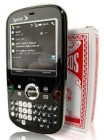
Earlier this morning, as last months
rumors suggested, Sprint finally took the wraps off the CDMA version of the
Treo Pro. The Sprint Version of the Pro made a brief appearance and was fully order-able on Sprint.com, only to be pulled a short while later. The device still appears to have been scrubbed from the site as of this writing, so we can only assume that an official announcement is likely forthcoming in the near future.
TreoCentral is also covering the leak and is reporting the device will hit Sprint retail stores this Sunday, January 25th.
The CDMA Treo Pro's specifications are slightly boosted from its older GSM sibling, as we reported the other day. Its Qualcomm MSM-7501a CPU's clock speed has indeed been confirmed as being boosted to 528mhz, a nice jump from the 400mhz GSM version.
Posted Thursday, January 22, 2009 11:04:47 AM PST
by Kris Keilhack
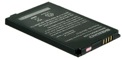
Back in November, we reported on
Seidio's 1650mAh extended capacity OEM-size battery for the then-new
Treo Pro. While the Seidio 1650mAh
Innocell battery that has been available for a few months packs approximately 10% more juice than Palm's stock 1500mAh offering, some heavy-duty users have complained about the lack of an ultra-high capacity battery for Palm's flagship Treo.
Fortunately, Seidio has again come to the rescue of power talkers everywhere. With little fanfare, a Seidio company official has made a announcement via the TreoCentral forums of the impending release of a giant 3500mAh extended-size Treo Pro battery. Unsurprisingly, this battery will require the replacement of the Pro's stock battery door with the provided replacement "rump" cover. With the 3500mAh milestone reached, this new Seidio release surpasses their previous 3200mAh batteries for the older Treo 650/700-series devices. In fact, I reviewed that exact battery in 2007 and gave it a solid 4/5 score.
Posted Wednesday, January 21, 2009 3:54:35 PM PST
by Ryan Kairer
In what could be interpreted as a hint of a legal battle to come, Apple's COO Tim Cook today made some possibly foretelling statements about iPhone competition and the broad series of patents Apple has secured around the iPhone platform. During todays Apple Inc. quarterly conference call he was asked specifically about smartphone competition and the
Palm Pre and Android:
Q: "There are other iPhone competitors coming to the market: Android, Palm Pre. How do you think about sustaining leadership in the face of these competitors?"
A: "It's difficult to compare to products that are not yet in the market. iPhone has seen terrific rating from customers. Software is the key ingredient, and we believe that we are years ahead of our competitors. Having different screen sizes, different input methods, and different hardware makes things difficult for developers. We view iPhone as primarily a software platform, which is different from our competitors. We don't mind competition, but if others rip off our intellectual property, we will go after them."
Posted Wednesday, January 21, 2009 11:56:24 AM PST
by Ryan Kairer
A new report from
Digitimes claims that Cypress Semiconductor will be the supplier of the touch screen technology and panel on the
Palm Pre.
Digitimes sources claim Cypress will be the sole provider for the capacitive multi-touch technology employed on the device.
A scan of Cypress' website shows a wide range of touchscreen products. The CY8CTMG110-32LTXI or the Multi-Touch Gesture TrueTouch controller seems the likely set of components. It offers single-touch, multi-touch and gesture capabilities with support for up to 44 X/Y sensor inputs and screen sizes 8.4" and below. Cypress says it can perform traditional touchscreen functions including interpreting single touches, and gestures such as tap, double-tap, pan, pinch, scroll and rotate. All of which have already been demonstrated on the Pre in some form.
Posted Wednesday, January 21, 2009 10:19:15 AM PST
by Ryan Kairer
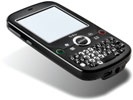 Palm
Palm has announced the arrival in Colombia of the
Treo Pro through Comcel. The Treo Pro now enjoys a wide dispersal in South and Latin America, while it still remains available in the US as an
unlocked handset. A version for Sprint,
while expected soon, remains in
rumorville.
The Treo Pro is Palm's new Quad-Band GSM phone (850/900/1800/1900MHz) with Tri-Band 3G HSDPA/UMTS (850/1900/2100MHz) support. It runs Windows Mobile 6.1 Professional Edition on a 400 MHz Qualcomm MSM7201 processor with a 320x320 pixel flush touchscreen, 256MB memory (100MB user available), microSD expansion (up to 32GB supported), built in Wi-Fi (802.11b/g with WPA, WPA2, and 801.1x authentication), Bluetooth 2.0, GPS and a 2.0 megapixel camera.
Posted Tuesday, January 20, 2009 3:03:36 PM PST
by Ryan Kairer

CompanionLink Software has announced that it will offer a two-way sync solution for the
Palm Pre. The company says it will extend its contact management and CRM software sync software to the Pre and
webOS.
Users will be able to sync contacts, addresses, phone numbers, email addresses, calendar events, tasks, notes, and alarms and reminders between the Palm Pre and popular contact management solutions like ACT! by Sage, Google, Palm Desktop, Lotus Notes, GoldMine, and Microsoft Outlook. Complete two-way synchronization ensures that any change to data on the Palm Pre will synchronize back with the contact management database. CompanionLink lets users choose between wired (USB) sync and wireless (over-the-air) sync with their phone.
Posted Tuesday, January 20, 2009 1:16:04 PM PST
by Kris Keilhack
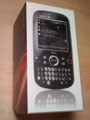 Engadget Mobile
 has
just posted a small unboxing pictorial of Sprint's version of the
Treo Pro. With the device's finalized retail packaging now out in the wild, the device's formal announcement, release date, and pricing remain the only mysteries surrounding the release. According to the most
recent report, the release date with Sprint is still rumored to be on track for the end of this month.
The Sprint Treo Pro's packaging, while outfitted with some Sprint branding details, appears otherwise identical in size and design to the unlocked GSM version, as well as the preliminary Pre packaging that was on display at CES.
Posted Tuesday, January 20, 2009 12:23:11 PM PST
by Kris Keilhack
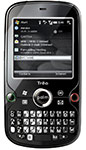 Rumor:
 While the WebOS-powered
Pre may be Palm's most anticipated upcoming smartphone offering, a CDMA version of the Treo Pro for Sprint appears to be the next Palm device that will actually arrive on store shelves. So while many have been expecting the long-anticipated CDMA version the
Treo Pro to merely substitute the GSM radio for a CDMA one, details are starting to emerge that the
CDMA Pro arriving on Sprint will see a noticeable boost in several key areas.
According to this WMExperts report as well as this TreoCentral article, some leaked Sprint internal training slides are now suggesting that the Sprint Treo Pro has received a few news-worthy hardware and software changes. First off, the Sprint Pro's CPU has reportedly received a nice boost to 528 MHz, a substantial increase over the previous 400 MHz. While the GSM Treo Pro has the highest-clocked CPU in a Palm smartphone to date, some users have reported that it does not feel as snappy in day-to-day usage as its older, Treo 800w brethren clocked at 333 MHz.
Posted Tuesday, January 20, 2009 11:50:50 AM PST
by Tim Carroll
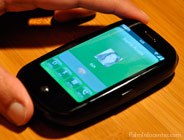 Rumor:
 It's one of the biggest question marks hanging over Palm's new Pre: where's the GSM model? Like the Treos 750 and 500v before it, the Pre is going to be a Vodafone exclusive in Europe if the
latest rumors are correct. Going on an email from a Vodafone UK customer service rep saying "we are still in early negotiation with Palm, but nothing is solid." In addition
an administrator post in Vodafone UK's forum let slip these details:
"That phone [the Pre] does look awesome, we were taking a look at this in the office the other day a few of us have our eye on it, I would keep your eyes peeled on the coming soon section here at our online shop."
Despite these early leaks, there is still no word on an concrete release dates as of yet, nor when a U.S. GSM (read: AT&T) version will be offered.
Posted Monday, January 19, 2009 12:28:26 PM PST
by Tim Carroll

The biggest potential sticking point for developers on Palm's new webOS is the lack of a "low-level" SDK. While the HTML/CSS/Javascript-based Mojo SDK should prove to be a boon for the development and porting of web-integrated applications, it's becoming increasingly apparent that Palm will also eventually need to offer a more "down-to-the-metal" approach to
webOS development, such as C, which is essential for intensive applications like movie players or 3D games. Palm Infocenter has spoken with two long-time PalmOS developers, TealPoint and Normsoft, in order to probe the issue a little deeper. Hit the jump for their thoughts.
Posted Monday, January 19, 2009 11:29:56 AM PST
by Ryan Kairer
 RESETgame
 has released version 2.0 of its popular Par 3 Golf game for
Palm OS and
Windows Mobile devices. Par 3 Golf II is a fast paced golf game with four courses rated "par 3." The courses, Tropic Greens, Royal Dunes, Shining Pines, and Desert Fronds, vary in terrain and difficulty. The game features realistic wind, gravity and friction and has a variety of holes with hills, water, sand traps, and sloping greens. You now have a choice of male or female character for solo or up to two computer opponents.
Par 3 Golf II v2.0 is available now for Palm OS and Windows Mobile. A free trial period is included and the game costs $9.99 for the full version.
Posted Monday, January 19, 2009 11:07:28 AM PST
by Tim Carroll
 Updated SplashData's mobile software
 has long been popular with Palm OS users, so the news that they were partnering with Palm on the new
webOS was welcomed by many. As part of our ongoing webOS coverage, Palm Infocenter contacted the SplashID developers for more information on their plans for the platform. SplashData CEO Morgan Slain has sent us a brief response, telling us how they plan to capitalize on webOS's unique development approach:
"We at SplashData are enthusiastic about the Pre and webOS, we're proud to have been featured in the announcement at CES, and we have been working with Palm to ensure we can support the launch with a new version of SplashID.
I like the web-based approach for applications since it allows us to leverage the investment we've already made in web-oriented services like SplashID Live."










 Palm News Higlights
 Latest Comments
 Reviews
 Special Deals
 About PalmInfocenter
 PalmInfocenter Mobile
 Links
Links RSS Feeds